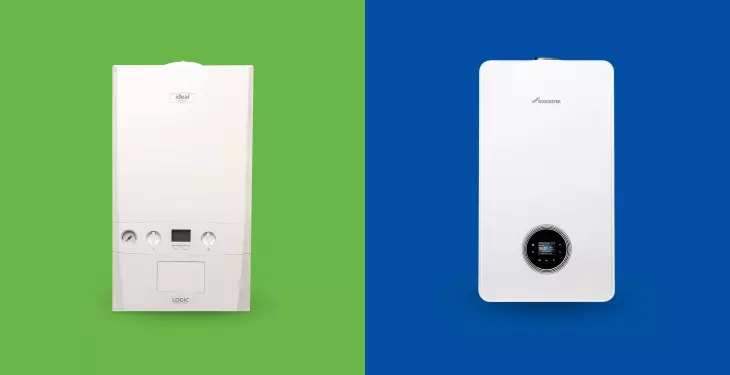
Gas boiler vs electric boiler: which is the best?

Written by Stephen Day
Gas Safe Engineer
Updated:
13 min read
The cost of running an electric boiler can be high, especially if you live in the UK. Let's find out if a gas boiler is still more cost effective.
In this article
Key takeaways
- Gas usually costs less to run on standard tariffs.
- Electric efficiency does not mean cheaper heating.
- Check electrical capacity and hot-water demand before switching.
- Compare heat pumps too if you want electric heating.
A gas boiler will usually cost less to run than an electric boiler in a home connected to mains gas. An electric boiler can suit a property with modest heating needs, no gas connection or a difficult flue route, provided its electrical supply and hot-water arrangements are suitable.
The decision involves more than efficiency. Compare the complete installation price, cost of delivering heat and practical requirements of each system. If you want to move away from gas, include a heat pump in that comparison: it uses electricity differently from an electric boiler.
This guide compares mains-gas boilers with electric resistance boilers. LPG has different fuel costs. iHeat supplies and installs gas boilers and heat pumps; this comparison explains the circumstances that affect the choice.
What is the difference between a gas and electric boiler?
A gas boiler burns fuel to heat water. An electric boiler uses electrical heating elements. Both can supply a wet central-heating system, where heated water circulates through radiators or underfloor heating.
The practical differences are:
Running costs: Gas generally has a lower energy cost for the same heat output on standard tariffs.
Connections: Gas needs a suitable gas supply and flue. Electric needs sufficient electrical capacity.
Hot water: Either system may use stored hot water, depending on the appliance and installation.
Space: An electric boiler avoids a flue, but a cylinder and other equipment can still take up room.
Maintenance: Requirements depend on the product and complete system. Electric does not automatically mean maintenance-free.
An electric boiler is also different from electric radiators or storage heaters, which heat rooms without circulating hot water from a central boiler. Energy Saving Trust explains the different electric heating systems.
Which is cheaper to run?
A gas boiler usually costs less to run because mains gas costs less per unit of energy than electricity. An electric boiler’s higher efficiency at the appliance does not normally overcome that price difference.
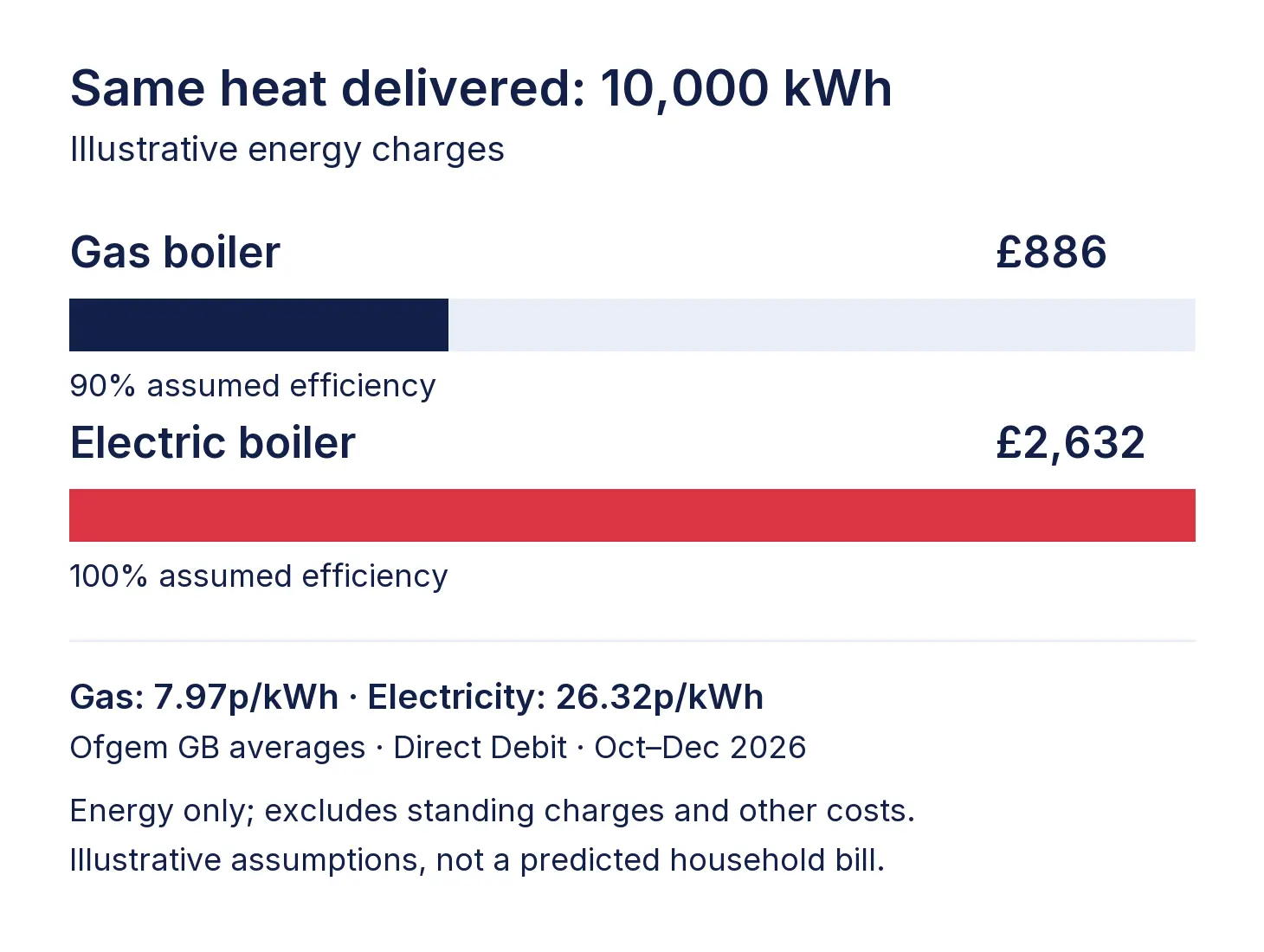
For 1 October to 31 December 2026, Ofgem publishes average Direct Debit price-cap rates across England, Scotland and Wales of:
Electricity: 26.32p per kWh.
Gas: 7.97p per kWh.
The gas rate includes 5% VAT. Ofgem states that electricity has no VAT during this period. Rates vary by region, payment method and tariff; these figures do not cover Northern Ireland. Source: Ofgem’s October–December 2026 rates.
Compare the same amount of heat
A fair comparison starts with the heat your home needs, rather than running two differently sized boilers at full power for the same number of hours.
For an illustrative 10,000kWh of heat, assume:
A gas boiler delivers 90% of its fuel energy as useful heat.
An electric boiler delivers 100% for this simplified calculation.
The published rates above apply throughout the example.
The resulting energy charges are:
Gas boiler: approximately £886 - 10,000 ÷ 0.90 × £0.0797.
Electric boiler: £2,632 - 10,000 ÷ 1.00 × £0.2632.
That makes electric heating approximately three times the energy cost in this example.
These are calculated comparisons, not predicted annual bills or measured boiler performance. They exclude standing charges, servicing, installation, gas-system auxiliary electricity and additional distribution or storage losses. If treated as an annual example, they hold one quarter’s rates constant; future prices can change.
Will removing the gas standing charge close the gap?
It can reduce the difference, but you should calculate how much.
Ofgem’s average gas standing charge for the same period is 29.68p a day, equivalent to about £108 over 365 days if unchanged. That is much smaller than the energy-cost difference in the example above. Source: Ofgem unit rates and standing charges.
Do not assume the charge disappears when you stop using the boiler. Ask your supplier what is required to end the gas supply, whether removal or disconnection costs apply, and what happens if you still use gas for cooking.
Why are electric boilers efficient but expensive to run?
Efficiency measures energy conversion; running cost also depends on what that energy costs.
An electric boiler converts almost all the electricity it consumes into heat at the appliance. For example, Heatrae Sadia quotes 99.8% efficiency for its Amptec electric flow boiler. That does not mean it delivers heat cheaply on every tariff. Source: Heatrae Sadia Amptec.
A gas boiler loses some energy through its exhaust and other operating losses. However, the lower price of gas can still make its delivered heat cheaper.
For your own comparison, use:
Cost per kWh of delivered heat = fuel unit price ÷ efficiency expressed as a decimal.
Be careful with different efficiency measures. A percentage describing conversion at the appliance is not necessarily the same measure used for a seasonal energy label, and neither is a complete household bill calculation.
How do installation costs compare?
An electric boiler is not automatically cheaper to install. Avoiding a gas connection and flue can simplify some jobs, while electrical upgrades and hot-water storage can add substantial work.
For a current gas example, iHeat advertises suitable straightforward combi replacements from £1,945 supplied and fitted, including VAT, checked on 1 October 2026. This is a starting package price, not a national average or the cost of a complete new heating system. See the boiler installation cost guide.
For an electric installation, obtain a quote that includes the proposed boiler, electrical work and hot-water arrangement. A supply-only appliance price will not show the full cost.
Replacing an existing gas boiler
A straightforward replacement may retain suitable radiators, pipework and the existing boiler position. The quote should identify the required flue, controls, cleaning, removal and commissioning.
Changing the boiler type or replacing a cylinder changes the scope. Compare those jobs separately from a simple combi swap.
Converting from gas to electric
The quote should explain:
Gas work: Safe disconnection and removal of redundant equipment.
Electrical work: The dedicated supply and any necessary upgrades.
Heating connections: Changes to pipework, pumps and controls.
Hot water: Whether storage is retained, added or replaced.
Finishing: Making good the former flue opening and affected surfaces.
Handover: Commissioning, certification and warranty registration.
Ask for the complete installed price including VAT, with exclusions clearly listed. This makes competing quotes more useful than a broad price range that combines very different installations.
Can your electrical supply support an electric boiler?
This needs checking before you choose the appliance. An electric boiler can place a substantial demand on the incoming supply, alongside other equipment in your home.
As a model-specific example, Elnur’s MATTIRA installation guide lists 52.2 amps at a 12kW setting on a 230V single-phase supply. The manual also requires the building’s supply capacity to account for other appliances. Source: Elnur MATTIRA installation guide.
That matters if you also have an electric shower, induction hob, EV charger or other large loads.
A suitably qualified installer should assess the available supply, required boiler output and any upgrades or network involvement. Do not assume a spare circuit means the whole property has enough capacity.
The manufacturer example illustrates the load involved. It is not a wiring specification or a recommendation for your home.
Will an electric boiler provide enough heating and hot water?
It can, if the system is designed for the property and household. Bedroom count alone is not a reliable way to decide.
There are two separate questions:
Heating: Can the boiler meet the home’s calculated heat loss in cold weather?
Hot water: Can the system meet the household’s demand at the required flow and temperature?
A gas combi’s advertised output may reflect the power needed to heat tap water quickly. It should not automatically become the required output for a replacement electric heating system.
Check whether hot water is stored
Electric systems are not all configured alike. Some boilers work with a separate cylinder, while some electric combination units incorporate storage.
For example, the Elnur MATTIRA MAC15 includes a 50-litre hot-water store. Its storage arrangement matters when assessing bathing demand and recovery between uses. Source: Elnur MAC15 specifications.
For any proposed system, ask the installer to explain:
Whether hot water is instantaneous or stored.
How much usable hot water is available.
How quickly the store reheats.
What happens when several outlets run together.
Whether incoming water pressure and flow are adequate.
Avoid blanket rules such as “electric boilers only suit one-bedroom homes” or “a gas boiler always supplies two showers”. The complete system determines performance.
Which homes suit each option?
A home already connected to mains gas
A gas replacement is often the practical starting point where the existing installation is suitable and keeping running costs down is the priority.
However, compare a heat pump if you want to reduce reliance on fossil fuels. A working gas connection does not remove the need to consider longer-term plans.
A small home with modest heating demand
An electric boiler may be worth assessing where demand is low, the electrical supply is suitable and installing gas or routing a flue would be difficult.
Lower demand reduces the total amount spent on heating. It does not make each unit of electricity cheaper. Energy Saving Trust identifies small or very well-insulated properties as circumstances where the higher running costs of direct electric heating may be less significant. Source: electric heating guidance.
A larger home or a property with high heat loss
Pay particular attention to annual consumption and peak heating demand before choosing an electric resistance boiler.
Insulation improvements can reduce demand, but the installer still needs to demonstrate that the proposed system can heat the property and supply its hot water.
A home without mains gas
Compare the realistic alternatives available to the property. That may include a heat pump, electric boiler or another suitable system.
An electric boiler avoids a new gas connection, but its running costs and electrical requirements still need assessing. Energy Saving Trust’s review of alternative heating technologies highlights these constraints. Source: alternative clean heating solutions.
Should you consider a heat pump instead?
Yes, if your aim is to heat with electricity. An electric boiler and a heat pump have very different energy requirements.
An electric boiler converts electricity into heat. A heat pump uses electricity to move heat from outside into the home, allowing it to deliver several units of heat for each unit of electricity consumed. Actual performance depends on the installation and operating conditions. Source: Energy Saving Trust’s heat pump guide.
For illustration, a heat pump achieving an overall seasonal performance factor of 3 would use about 3,333kWh of electricity to provide 10,000kWh of heat. At the electricity rate used earlier, that costs approximately £877 in energy charges.
This uses an assumed seasonal performance factor, not a guaranteed result. It excludes installation, standing charges and servicing. The system boundary must include the electricity needed to deliver the heat being compared.
A heat-pump assessment should cover heat loss, radiator performance, outdoor space, hot-water arrangements and expected seasonal consumption. The heat pump sizing guide explains why the property assessment matters.
Can solar panels or a cheaper tariff make an electric boiler worthwhile?
They can reduce purchased electricity costs, but the timing and amount of energy matter.
Solar generation will not necessarily coincide with heating demand. A useful assessment compares expected generation with when the boiler will run, rather than assuming all annual solar output is available for heating.
Batteries can shift electricity between times of day, but their capacity, output, losses and installation cost must be included. Energy used by the boiler is also unavailable for other household appliances or export income. Source: Energy Saving Trust’s solar panel guide.
For a time-of-use tariff, calculate the proportion of heating supplied at each rate. Heating stored water overnight may shift hot-water consumption, but it does not automatically move the whole home’s daytime heating demand into the cheaper period.
Ask for a calculation based on your likely usage pattern, not the cheapest advertised unit rate alone.
What about servicing, safety and lifespan?
Compare the maintenance requirements of the complete system, including any cylinder.
For gas boilers, arrange maintenance in line with the manufacturer’s instructions and use a Gas Safe registered engineer for gas work. Energy Saving Trust recommends regular servicing to keep boilers operating safely and efficiently. Source: boiler guidance.
Electric boilers avoid combustion inside the appliance, but still contain electrical and water-system components. Maintenance and warranty conditions vary. Elnur’s MATTIRA instructions, for example, require an annual maintenance check to preserve the manufacturer’s warranty. Source: MATTIRA maintenance requirements.
Do not base the decision on a promised lifespan alone. Ask about warranty conditions, replacement-part availability and who can service the proposed model locally.
Are electric boilers better for the environment?
Electric boilers produce no combustion emissions at the appliance. That is different from having no environmental impact.
Their wider impact depends on electricity generation as well as manufacture, installation and energy use. Gas boilers burn a fossil fuel in the home.
For a household choosing electric heating, the amount of electricity needed matters too. A well-performing heat pump can provide the same heat using less electricity than a resistance boiler. Energy Saving Trust explains this distinction in its heating-system guidance.
Avoid treating “electric”, “renewable tariff” and “zero carbon” as interchangeable claims.
Are gas boilers being banned?
Do not confuse requirements for new buildings with replacing a boiler in an existing home.
In England, the Future Homes and Buildings Standards principally come into force on 24 March 2027, subject to transitional provisions and separate arrangements for higher-risk building work. Government guidance says gas boilers will not meet the required new-home performance standard. Sources: commencement rules and government heating-policy factsheet.
These changes do not mean every existing homeowner must remove their gas boiler on that date. They also should not be described as a UK-wide ban that began in 2025.
Building rules differ across the UK. For a new build or major project, confirm the applicable national requirements and transitional position before selecting the heating system.
How should you make the final choice?
Start with a property assessment and compare installation cost plus expected running and maintenance costs.
Before accepting a quote, ask for:
The heating assessment: What output does the property need?
The hot-water design: How will it meet your household’s demand?
The complete installation scope: What is included and excluded?
The running-cost assumptions: Which tariffs, demand and efficiencies were used?
The ongoing requirements: Servicing, warranty conditions and available support.
For a home already using mains gas, a suitable gas replacement will often have lower running costs than an electric resistance boiler. An electric boiler can still be a practical choice where demand and installation constraints favour it.
If the aim is to move away from gas, assess a heat pump alongside the electric boiler before deciding.
Frequently Asked Questions
Will a gas boiler work during a power cut?
Most modern gas central-heating systems still need electricity for controls and circulation, so choosing gas does not generally provide heating during a power cut. Follow the appliance’s user instructions when power returns.
Can I keep my radiators when switching to an electric boiler?
Often, but the installer must check their condition, output and compatibility with the proposed system. Electric flow boilers can work with standard wet-system radiators; Heatrae Sadia lists this compatibility for its Amptec range.
Does a smaller electric boiler automatically cost less to run?
No. A lower maximum output does not remove the home’s need for heat. It may run for longer to meet the same demand, or fail to keep the property warm if undersized. Compare expected energy consumption and tariff costs, rather than the appliance’s kW rating alone.
Last updated: