Viessmann F2 Fault


Written by Stephen Day
Gas Safe Engineer
Updated:
5 min read
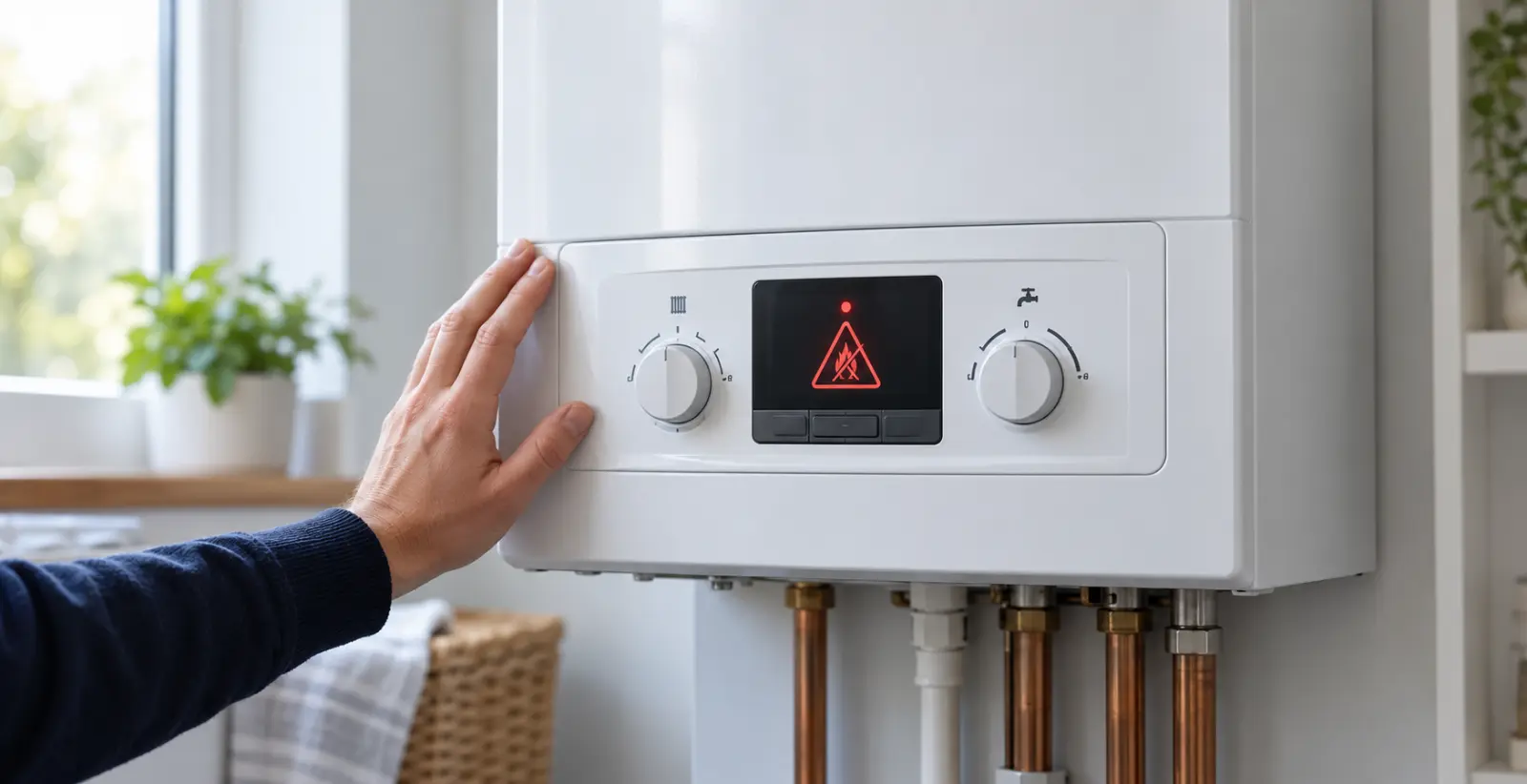
The Viessmann F2 fault means the boiler's temperature limiter has responded, placing the burner into a fault state.
In this article
Key takeaways
- F2 means the boiler's temperature limiter has responded.
- Circulation or overheating-related problems may be involved.
- If F2 persists or returns, the boiler needs professional diagnosis.
If your Viessmann boiler displays F2, the burner has entered a fault state because the temperature limiter has responded.
This is more specific than simply describing F2 as a generic burner lockout. The important question is why the temperature limiter has been triggered.
What does the Viessmann F2 fault mean?
Viessmann defines F2 as a fault where the temperature limiter has responded and the burner enters a fault state.
The temperature limiter is a safety control. If the boiler reaches conditions that trigger it, the burner is stopped rather than being allowed to continue operating.
This can leave you without normal heating or hot water until the underlying problem is addressed.
What can cause a Viessmann F2 fault?
Viessmann's technical guidance points towards several areas that may need checking when F2 occurs, including:
the heating system fill level
the circulation pump
air within the system
the temperature limiter
the temperature limiter's connecting cables
These possibilities mean F2 shouldn't automatically be blamed on one particular component.
The boiler and heating system need to be assessed to establish why the temperature limiter responded.
Can circulation problems cause F2?
Circulation is one area that may need investigating.
Water needs to circulate effectively through the boiler and heating system so that heat can be transferred away from the boiler.
If circulation is inadequate, temperatures can rise abnormally. Viessmann therefore includes checking the circulation pump and venting the heating system among its diagnostic measures for F2.
A circulation problem doesn't automatically mean the pump needs replacing. The actual cause needs to be established first.
Can air in the heating system contribute to F2?
Air within the heating system can interfere with normal circulation.
Viessmann includes venting the system among the measures associated with diagnosing an F2 fault.
If your radiators show obvious signs of trapped air, such as remaining cold towards the top, bleeding the affected radiator may be appropriate.
Check the system pressure afterwards, as bleeding radiators can reduce it.
Should you check the boiler pressure?
Checking the boiler pressure is a sensible external check because Viessmann includes the heating system fill level among the areas to investigate for F2.
Compare the displayed pressure with the operating instructions for your particular boiler.
If the pressure is outside the recommended range, follow the manufacturer's instructions for your model.
Don't repeatedly add water if the pressure keeps falling. Persistent pressure loss needs separate investigation.
Can you reset a Viessmann boiler showing F2?
Follow the operating instructions for your particular Viessmann model.
A reset may allow the boiler to attempt normal operation again, but it doesn't correct an underlying circulation, temperature limiter or electrical problem.
If F2 returns after an appropriate reset, don't keep resetting the boiler. The reason the temperature limiter is responding needs to be identified.
Can you fix a Viessmann F2 fault yourself?
Homeowner troubleshooting should remain limited to safe external checks.
You can check the displayed system pressure and look for obvious signs that radiators contain trapped air.
Don't remove the boiler casing or attempt to inspect the circulation pump, temperature limiter, connecting cables or other internal components yourself.
Those checks should be carried out by an appropriately qualified professional.
What will an engineer check?
Viessmann's technical documentation identifies several areas relevant to an F2 fault.
Depending on the boiler and symptoms, an engineer may need to assess:
the heating system fill level
circulation through the system
circulation pump operation
whether the system needs venting
the temperature limiter
electrical connections associated with the temperature limiter
The objective is to determine why the temperature limiter responded rather than simply clearing the displayed code.
How much does a Viessmann F2 repair cost?
There isn't one reliable price for repairing an F2 fault because the code doesn't identify a single failed component.
The work required will depend on what caused the temperature limiter to respond.
A circulation issue, electrical connection problem and defective component can require very different repairs, so the fault should be diagnosed before estimating the likely cost.
Does F2 mean you need a new boiler?
No. An F2 fault alone doesn't mean your Viessmann boiler needs replacing.
The underlying cause should be diagnosed first.
If the fault can be repaired appropriately and the boiler is otherwise in good condition, replacing the entire boiler may not be necessary.
Replacement is a separate decision that should take account of the diagnosed problem and the boiler's wider condition and repair history.
What to do when your Viessmann boiler shows F2
F2 means the boiler's temperature limiter has responded and the burner has entered a fault state.
You can check external information such as the system pressure and look for signs of trapped air in your radiators.
If F2 remains or returns, arrange professional diagnosis. The circulation pump, temperature limiter and associated internal components shouldn't be investigated as a DIY repair.
Need a new boiler?
Get a quote in 60 seconds, fitted as fast as next day!
0% APR finance available.
Last updated: