Why Does My Air Conditioner Keep Turning On and Off?

Written by Stephen Day
Gas Safe Engineer
Updated:
13 min read
If your air conditioner keeps turning on and off every few minutes, it may be short cycling, which can indicate a sizing, airflow, sensor or system fault.
In this article
Key takeaways
- Repeated short cycles can indicate an underlying problem.
- Oversizing, airflow and sensor issues are common causes.
- Inverter operation can sometimes be mistaken for short cycling.
An air conditioner will naturally switch between different operating states as it maintains the temperature in your home.
However, repeatedly starting and stopping over short periods can be a sign that something isn't working as intended.
At iHeat, we'd first establish whether the system is genuinely short cycling or simply adjusting its output normally.
This distinction is particularly important with modern inverter air conditioners, which can reduce their output as a room approaches the target temperature without necessarily switching the entire system off.
If your AC really is repeatedly stopping and restarting, the pattern itself can provide useful clues about where to investigate.
What is air conditioner short cycling?
Short cycling is when an air conditioner repeatedly starts and stops without completing a normal cooling cycle.
You might notice the system:
Starting normally before stopping after only a few minutes
Restarting again shortly afterwards
Repeating the pattern throughout the day
Struggling to maintain a stable room temperature
Exactly how long an air conditioner should run varies considerably.
Room temperature, outdoor conditions, system size, insulation, glazing and the temperature you've selected can all affect operation.
For that reason, there's no universal number of minutes that automatically proves an air conditioner is short cycling.
What matters more is whether the repeated stopping and starting is unusual for your system and whether it's accompanied by poorer cooling, temperature swings or other symptoms.
Why does my AC keep turning on and off?
Repeated cycling can have several possible causes, so the best starting point is to look at how the system behaves.
What you're noticing | Possible area to investigate | Next step |
|---|---|---|
AC cools very quickly then stops | System may be oversized | Check whether the unit is correctly sized for the room |
AC stops and starts while the room temperature changes noticeably | Temperature sensor or controls | Check settings and sensor conditions |
Cycling happens alongside weak airflow | Filter or airflow restriction | Check accessible filters and airflow |
Cycling happens with visible ice | Frozen indoor coil | Switch off and investigate the freezing problem |
System stops unexpectedly or trips | Electrical or control fault | Arrange professional inspection |
Inverter AC appears to become quieter or slower | May be normal modulation | Check whether the compressor is actually switching off |
Cycling started suddenly after previously normal operation | Developing fault or changed operating conditions | Check for other symptoms |
This isn't enough to diagnose a component with certainty, but it can help distinguish normal operation from behaviour that deserves further investigation.
Could an oversized air conditioner cause short cycling?
Yes. An air conditioner that's substantially oversized for the space can potentially reach the target temperature too quickly and shut down before operating as intended.
Air-conditioning capacity needs to be matched to the cooling demand of the room rather than simply choosing the most powerful unit available.
An installer should consider factors including:
Room dimensions and volume
Insulation
Window size and orientation
Solar gain
Number of occupants
Heat-producing appliances
How the room will normally be used
If a system has too much capacity for the space and its controls cannot modulate sufficiently to match the low load, it may spend more time starting and stopping.
That's one reason correct air-conditioning sizing matters. A bigger unit isn't automatically a better one.
How can you tell if your AC is oversized?
Short cycling alone doesn't prove that your air conditioner is oversized.
However, sizing becomes more relevant if the system has behaved this way since installation and appears to bring the area around the indoor unit to temperature very quickly before shutting down.
An installer can assess the system capacity against the actual heating and cooling requirements of the room.
If the cycling has only appeared recently after months or years of normal operation, we'd be more cautious about blaming the original system sizing without investigating other causes first.
Could the thermostat or temperature sensor be causing it?
Yes. Your air conditioner relies on temperature sensing and electronic controls to determine how much cooling the room requires.
If the system receives an inaccurate temperature reading, it may respond incorrectly.
For example, the unit might determine that the target temperature has been reached and reduce or stop cooling, only to restart shortly afterwards when the sensed temperature changes again.
With many domestic split systems, temperature sensing is integrated into the indoor unit or associated controls rather than using the type of separate wall thermostat homeowners may associate with central heating.
The exact arrangement depends on the system.
Check your temperature settings first
Before assuming there's a sensor fault, check the basics.
Make sure:
The system is in the intended cooling or heating mode
The target temperature is sensible
A timer or schedule isn't controlling operation
Sleep or energy-saving modes haven't been activated unintentionally
Doors or windows aren't creating rapidly changing room conditions
If the system still repeatedly stops and restarts despite sensible settings, an engineer can investigate the controls and sensors properly.
Can a dirty filter make an air conditioner turn on and off?
Restricted airflow can contribute to abnormal air-conditioning operation.
The indoor unit needs sufficient airflow across its heat exchanger. A heavily clogged filter can reduce that airflow and make it harder for the system to operate normally.
Depending on the system and conditions, you might also notice:
Weaker airflow
Reduced cooling
The unit running differently from normal
Ice developing inside the unit
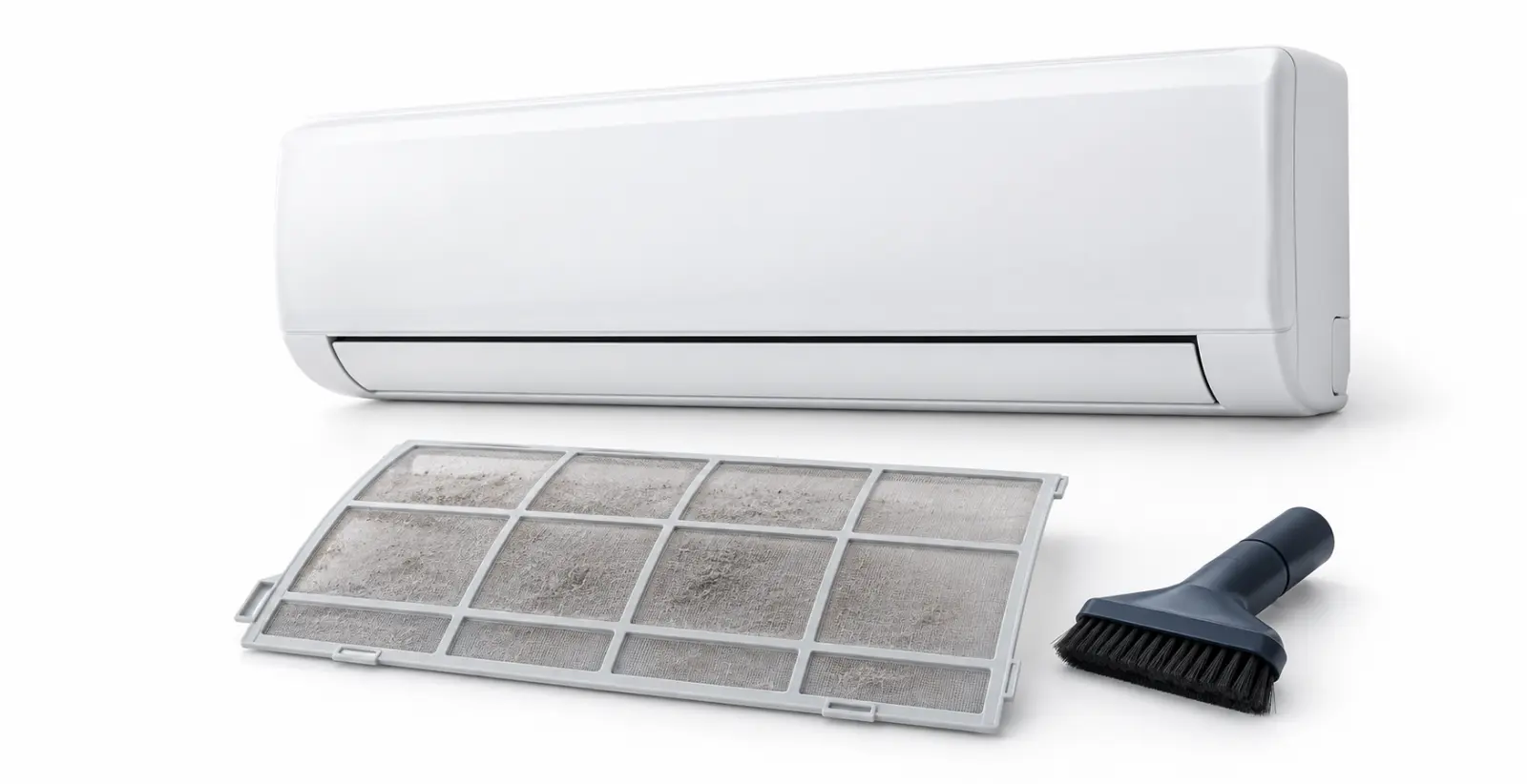
Checking accessible filters is one of the more useful homeowner checks because it doesn't require dismantling the air-conditioning system.
Follow the manufacturer's instructions for removing and cleaning washable filters. If the filter is damaged or isn't designed to be washed, it may need replacing instead.
Can frozen coils cause short cycling?
Freezing and repeated cycling can sometimes occur together, particularly where airflow or another system problem has affected normal operation.
If you can see ice or frost on the indoor unit, don't keep repeatedly restarting the air conditioner in an attempt to make it work.
Our dedicated guide to why your AC is freezing up covers the causes and appropriate checks in detail.
For this issue, the important point is that the ice may be a symptom of the underlying problem, rather than short cycling itself being the root cause.
Once the system has thawed, recurring ice or abnormal cycling should be professionally investigated rather than repeatedly reset.
Can an electrical fault cause repeated switching?
Yes. Electrical, electronic or control faults can potentially cause an air conditioner to stop unexpectedly and restart.
Possible faults can involve controls, sensors, circuit boards, power supplies or other components, depending on the system.
This is different from normal temperature-controlled cycling.
Warning signs that deserve professional attention include:
Unexpected shutdowns
Breakers repeatedly tripping
Fault or error codes
Burning smells
Buzzing or other new electrical noises
A system that repeatedly attempts to start but won't remain running
Homeowners shouldn't remove covers or attempt electrical repairs inside an air-conditioning unit.
If your AC displays a fault code, our guide to common air-conditioning errors can help you understand the next appropriate step, but persistent electrical faults should be investigated by a suitably qualified air-conditioning engineer.
Is an inverter air conditioner short cycling if it slows down?
Not necessarily.
Modern inverter air conditioners can vary compressor speed to match the amount of heating or cooling required. Once the room approaches your chosen temperature, the compressor may reduce its output rather than continuing to operate at full capacity.
You might notice the outdoor unit becoming quieter, the indoor airflow changing or the system appearing to do less work.
That can be completely normal.
The important distinction is whether the compressor is modulating its output or repeatedly shutting down and restarting over short periods.
Our guide to how inverter air conditioning works explains variable-speed compressor operation in more detail.
Do inverter air conditioners ever switch off?
Yes. Inverter technology doesn't mean an air conditioner must run continuously.
An inverter system can reduce compressor speed considerably when demand is low, but there are circumstances where the compressor may stop completely.
Normal operation varies according to the system, room conditions, outdoor temperature, operating mode and manufacturer controls.
That's why simply noticing that your air conditioner has stopped isn't enough to diagnose short cycling.
Repeated, unusually short stop-start operation accompanied by poor temperature control or another fault symptom is more significant.
Why has my air conditioner suddenly started short cycling?
If your system previously operated normally but has recently started switching on and off repeatedly, that change is useful diagnostic information.
An air conditioner doesn't suddenly become oversized after years of use. Unless the area it serves has changed significantly, a new cycling problem makes other causes worth investigating first.
These could include:
Restricted airflow
Dirty filters
A developing sensor or control problem
Coil freezing
An electrical fault
Changed operating settings
Another system fault affecting normal operation
Think about what changed around the same time.
If the cycling began immediately after changing settings, cleaning the system or altering how the room is used, mention that when arranging an inspection.
Can short cycling damage an air conditioner?
Persistent short cycling isn't something to ignore.
Repeated starts and stops can place unnecessary demands on system components and may prevent the air conditioner from maintaining comfortable room conditions efficiently.
More importantly, short cycling can be a symptom of another problem. Simply continuing to restart the system doesn't address an airflow restriction, sensor problem, electrical fault or other underlying cause.
If the behaviour is persistent or has appeared suddenly, finding the cause is more useful than trying to force the air conditioner to keep running.
Does short cycling increase electricity use?
Repeated cycling can prevent an air-conditioning system from operating as efficiently as intended, but you shouldn't diagnose energy consumption from cycling alone.
Electricity use depends on factors including:
System efficiency
Cooling or heating demand
Unit capacity
Outdoor temperature
Temperature setting
Property characteristics
How long the system operates
For an inverter system, efficient operation often involves reducing compressor output once the room approaches its target temperature.
That's different from repeatedly stopping and restarting because of a fault.
For homeowners concerned primarily about energy consumption rather than abnormal cycling, our guide to air-conditioning running costs covers that topic in more detail.
What should you check if your AC keeps turning on and off?
Before arranging an engineer, there are several straightforward checks you can make without opening the unit.
1. Check the operating mode
Make sure the air conditioner is actually set to the mode you intend to use.
Automatic, sleep, timer and energy-saving functions can change how a system behaves and may sometimes be mistaken for a fault.
2. Check the target temperature
An unusual temperature setting can affect how frequently the system needs to operate.
Choose a sensible target and observe whether the repeated cycling continues.
3. Check accessible filters
Inspect the indoor unit's user-accessible filters according to the manufacturer's instructions.
If they're heavily clogged, clean or replace them as appropriate for the specific filter.
4. Check for visible ice
If the indoor unit or accessible pipework is visibly icing up, stop repeatedly restarting the system.
Allowing it to continue operating while frozen doesn't solve whatever caused the freezing.
5. Look for a fault code
Check the indoor unit, controller or app for an error or warning.
Record the exact code rather than repeatedly clearing it, as this can be useful information for an engineer.
6. Observe the cycling pattern
Note approximately how long the system operates before stopping and how quickly it restarts.
Also note whether the room actually reaches the selected temperature.
This information can help an installer distinguish normal control behaviour from genuine short cycling.
When should you call an air-conditioning engineer?
Arrange professional diagnosis if your air conditioner continues to cycle abnormally after the basic checks above.
You should also seek professional help if:
The system repeatedly trips an electrical circuit
An error code keeps returning
Ice repeatedly forms
The unit attempts to start but quickly shuts down
Cooling performance has noticeably deteriorated
You notice unusual electrical noises or smells
The cycling started suddenly without an obvious change in settings
You suspect the system was incorrectly sized
Don't remove electrical covers, interfere with refrigerant components or attempt internal repairs yourself.
A suitably qualified air-conditioning engineer can assess system operation, airflow, controls, sensors and installation conditions to identify what's actually causing the repeated cycling.
Can servicing prevent short cycling?
Routine maintenance can help identify issues that might otherwise affect air-conditioning performance, although servicing can't guarantee that short cycling will never occur.
Filters, heat exchangers, drainage, electrical connections and overall system operation can all form part of appropriate maintenance depending on the equipment.
Homeowners also have a role in keeping user-serviceable filters clean according to the manufacturer's instructions.
Our air-conditioning maintenance guide covers routine homeowner care and professional maintenance in more detail.
If the system has already started short cycling, however, servicing shouldn't simply be treated as a generic fix. The specific cause of the abnormal cycling still needs to be identified.
Does short cycling mean your air conditioner needs replacing?
Usually, no.
Repeated cycling can have causes that don't require replacing the entire system, such as an airflow restriction or a problem with controls or sensors.
Replacement becomes more relevant if professional assessment identifies a significant issue that isn't economical to repair, or if an existing system is fundamentally unsuitable for the space it serves.
An incorrectly sized system may also require a broader review because servicing or replacing individual components won't change the capacity the unit was designed to provide.
At iHeat, we'd recommend establishing why the system is cycling before making decisions about repair or replacement.
How to stop your air conditioner repeatedly turning on and off
If your air conditioner keeps turning on and off, start by checking its mode, temperature setting and accessible filters. Look for visible ice or fault codes and pay attention to how long the system runs before stopping.
If you have an inverter air conditioner, make sure what you're seeing is actually repeated shutdown and restart behaviour rather than the compressor simply reducing its output as demand falls.
Persistent short cycling deserves investigation, particularly when it's accompanied by weak cooling, freezing, electrical problems or recurring error codes.
Correct system sizing also matters from the beginning. At iHeat, appropriate air-conditioning installation involves assessing the property and room requirements rather than simply selecting the highest-capacity unit available.
Once simple homeowner checks have been ruled out, a qualified air-conditioning engineer can determine whether the repeated cycling is being caused by airflow, controls, sensors, system sizing or another fault.
Need a new boiler?
Get a quote in 60 seconds, fitted as fast as next day!
0% APR finance available.
Last updated: