


How Many Solar Panels Do I Need in the UK?

Written by Bethany Armstrong
Renewables Manager
Updated:
A clear guide to calculating the right number of solar panels for your home based on electricity usage, roof suitability and realistic UK performance expectations.
- Step 1: Check your annual electricity usage
- Step 2: Understand how much one solar panel produces
- Step 3: Calculate your estimated panel number
- How many solar panels does the average UK home need?
- How roof space affects panel numbers
- What if your electricity usage will increase?
- How much do solar panels cost in the UK in 2026?
- So how many solar panels do you need?
Key takeaways
- Most UK homes need 8 to 14 solar panels.
- A 400W panel generates roughly 350 kWh per year in UK conditions.
- Panel count should be based on annual kWh usage, not house size.
When people search “How many solar panels do I need in the UK?”, they usually want a simple answer.
For most households, the perfect number of panels for home solar installation often falls between 8 and 14.
However, the only accurate way to calculate this is by reviewing your annual electricity consumption in kilowatt hours (kWh).
System sizing should always start with usage, not guesswork.
Step 1: Check your annual electricity usage
Your annual kWh usage is the foundation of solar system design.
You can find this on:
Your yearly energy statement
Your supplier’s online account
Your smart meter portal
Typical UK annual electricity usage:
2,000 to 2,500 kWh – smaller homes
2,700 to 3,500 kWh – average 3-bedroom home
4,500 to 6,000+ kWh – larger or higher-demand households
Electricity consumption varies significantly between homes. Two similar-sized properties can have very different energy profiles depending on insulation, heating type and occupancy patterns.
Step 2: Understand how much one solar panel produces
Most modern UK installations use panels rated between 400W and 430W.
In UK conditions, a 400W panel typically generates around 340 to 380 kWh per year.
Output depends on:
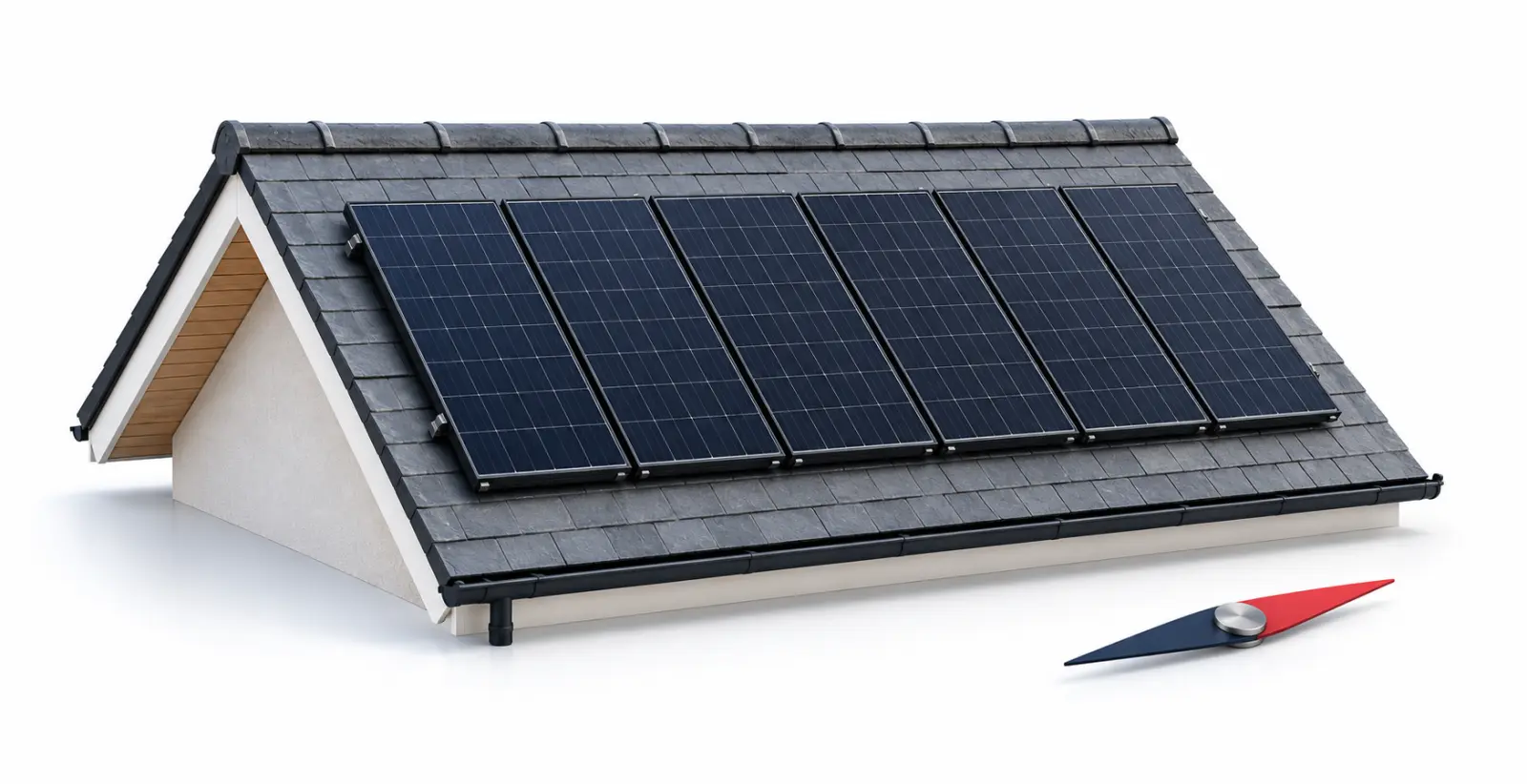
Roof orientation
Roof pitch
Shading
Geographic location
South-facing roofs generally achieve the highest annual yield. East and west-facing roofs remain effective but distribute generation differently across the day. North-facing roofs usually produce less.
Generation figures are based on annual modelling rather than guaranteed daily output.
Step 3: Calculate your estimated panel number
A practical starting formula is:
Annual electricity usage ÷ average annual output per panel
Example:
If your home uses 3,600 kWh per year
And each panel produces roughly 360 kWh annually
3,600 ÷ 360 = 10 panels
This provides an estimated panel count needed to match annual electricity consumption.
Real-world savings depend on how much of that solar energy you use during the day rather than export.
How many solar panels does the average UK home need?
In practical installation terms:
6 to 8 panels suit lower-usage homes
8 to 12 panels suit most family households
12 to 16 panels suit higher-demand properties
14+ panels are common where electric vehicles or electric heating are used
For an average 3-bedroom home using around 3,000 to 3,500 kWh per year, 8 to 12 panels is typical.
However, professional design should confirm this using real usage data.
How roof space affects panel numbers
Physical roof space can limit how many panels can be installed.
A typical 400W panel measures approximately 1.7 metres by 1.1 metres. Ten panels usually require around 17 to 20 square metres of usable roof space.
Panel placement can be restricted by:
Chimneys
Roof windows
Structural roof layout
Shading from nearby buildings or trees
Not all roofs can accommodate the number of panels suggested by electricity usage alone.
Should you size to cover 100 percent of your usage?
Not always.
Solar panels generate electricity during daylight hours. If your household uses most electricity in the evening, a portion of generation will be exported to the grid.
Because export payments are typically lower than import rates, system design often focuses on:
Matching generation to realistic usage patterns
Avoiding unnecessary oversizing
The goal is balanced performance rather than maximum panel count.
What if your electricity usage will increase?
Future demand should be considered when sizing your system.
Electric vehicles can add 2,000 to 3,000 kWh per year depending on mileage. Electrification of heating can also increase electricity consumption.
If higher demand is expected, additional panel capacity may be appropriate at installation stage.
How much do solar panels cost in the UK in 2026?
Installed costs depend on system size, equipment and roof complexity.
Typical 2026 UK guide ranges:
3kW system (6 to 8 panels): £5,000 to £6,500
4kW system (8 to 10 panels): £6,000 to £7,500
5kW system (10 to 14 panels): £7,000 to £9,000
6kW+ systems: £8,500 to £11,000+
These figures usually include panels, inverter, mounting system, installation and certification.
Final cost varies depending on property layout and any required electrical upgrades.
How professionals determine the correct number of panels
Accurate system design involves:
Reviewing the last 12 months of electricity usage
Assessing usable roof area
Modelling expected annual generation
Confirming inverter sizing
Managing required grid notification or approval
At iHeat, systems are designed around verified consumption data rather than fixed packages. Installation is completed by MCS-certified engineers, ensuring compliance with UK standards.
This approach reduces the risk of overestimating or underestimating panel requirements.
So how many solar panels do you need?
For most UK homes, the answer sits between 8 and 14 panels.
The only reliable way to determine the correct number is to review:
Your annual kWh usage
Your roof suitability
Any planned increases in electricity demand
Solar systems perform best when matched carefully to real consumption rather than property size assumptions.
If you know your annual electricity usage, you can calculate a strong estimate immediately using the formula above.
Last updated:
Written by Bethany Armstrong
Renewables Manager at iHeat
Bethany Armstrong is a renewables expert and operations manager at iHeat, specialising in heat pump solutions and solar project delivery across the UK.
LinkedInArticles by Bethany Armstrong are reviewed by iHeat’s technical team to ensure accuracy and reliability.
More solar & battery storage help & advice
03rd October, 2026
The best angle and direction f...
Discover how roof angle, direction and shading affect solar generation—and why your roof m...
 Read Article

30th September, 2026
Solar Panel Grants
Find out what help is available towards solar panel installation, who may qualify and how...
Read Article
29th September, 2026
Solar Panels on Finance: Sprea...
iHeat offer solar finance at 9.9%
Read Article