Solar Panels Not Producing Enough Power? Causes Explained

Written by Bethany Armstrong
Renewables Manager
Updated:
6 min read
Solar panels can underperform due to shading, system setup, or environmental factors, but most issues can be identified and improved with the right checks.
In this article
Key takeaways
- Lower output is often caused by shading, system setup, or seasonal changes.
- Small issues can have a noticeable impact on overall generation.
- Simple checks can help you understand whether your system is performing as it should.
If your solar panels are not producing as much power as you expected, you are not alone.
Many homeowners notice fluctuations in performance at some point, especially after the system has been installed for a while.
In most cases, the issue is not a complete failure. It is usually linked to how the system is positioned, how it is being used, or external conditions affecting generation.
The key is understanding what “normal” performance looks like and knowing how to spot when something is not quite right.
This guide breaks down the most common causes of low solar output, along with practical steps you can take to identify and improve performance.
What causes solar panels to produce less power?
Shading from trees, buildings, or nearby objects
Solar panels rely on consistent exposure to sunlight.
Even partial shading across a panel can affect how the entire system performs, particularly in systems where panels are connected in series.
From a technical perspective, shading disrupts the electrical flow across the panel string, which reduces overall output rather than just affecting one section.
What you can do:
Check your roof at different times of day to see if shadows fall across your panels.
Look out for seasonal changes, such as trees gaining leaves in spring and summer.
If shading is unavoidable, speak to a professional about system upgrades that reduce the impact.
Panel angle, orientation, and positioning
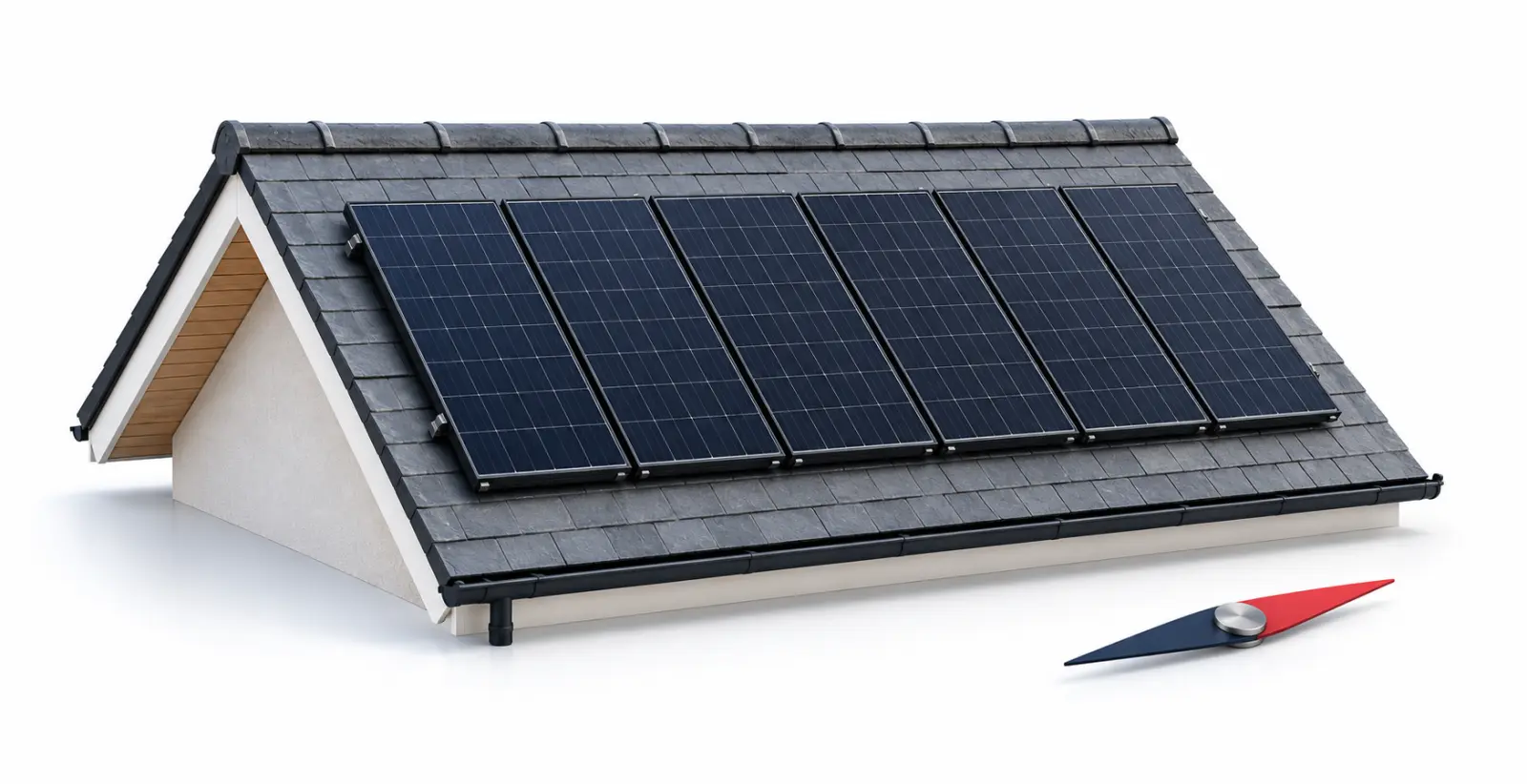
Solar panels perform best when they are positioned to capture the highest possible levels of sunlight throughout the day.
In the UK, south-facing systems usually generate the most energy, with east and west-facing systems producing slightly less but still performing well.
The angle of the panels also matters. If panels are too flat or too steep, they may not capture sunlight as effectively across the year.
This links to something called solar irradiance, which is the amount of sunlight energy reaching your panels.
Poor positioning reduces how much of that energy your system can convert into electricity.
What you can do:
Check your system’s original design expectations against current performance.
If your system consistently underperforms, it may be worth having the positioning reviewed.
Avoid comparing your output directly with someone else’s system unless the setup is very similar.
Seasonal changes and weather patterns
Solar output in the UK naturally varies throughout the year. Longer days and stronger sunlight in summer lead to higher generation, while shorter days and lower sun angles in winter reduce output.
Cloud cover also plays a role. Panels still generate electricity on cloudy days, but at a reduced level.
What you can do:
Compare your performance month by month rather than day by day.
Look at year-on-year trends instead of short-term drops.
Expect noticeable differences between summer and winter generation.
System temperature and heat build-up
It is a common assumption that hotter weather improves solar performance. In reality, excessive heat can reduce efficiency.
Solar panels operate most efficiently within a certain temperature range. When they get too hot, electrical resistance increases, which slightly reduces output.
What you can do:
Make sure there is airflow beneath the panels where possible.
Avoid installing panels too close to surfaces that trap heat.
Understand that very hot days may not always produce peak output.
System age and gradual degradation
Solar panels slowly lose efficiency over time. This is a normal process and happens gradually rather than suddenly.
This reduction is usually small year to year, but over a longer period, it becomes more noticeable.
What you can do:
Track long-term performance trends using your monitoring system.
Compare current output with earlier years rather than initial expectations alone.
Accept that some reduction is normal, but large drops should be investigated.
How to check if your solar system is underperforming
Before assuming there is a fault, it is important to confirm whether your system is actually underperforming.
Here is a simple way to check:
Step 1: Check your monitoring app
Look at daily, monthly, and yearly generation.
Compare recent performance with previous periods.
Step 2: Look for sudden drops
A sharp drop in output may indicate a system issue.
Gradual changes are more likely linked to seasons or ageing.
Step 3: Compare with expected output
Use your original estimate as a guide, not an exact target.
Small variations are normal.
Step 4: Visually inspect your panels
Look for obvious shading, dirt, or physical damage.
Check for anything new that could be affecting sunlight exposure.
Practical ways to improve solar panel performance
If your system is underperforming, there are a few simple actions you can take.
Keep panels clean
Light dirt is usually not a major issue, but heavy build-up can affect output. Cleaning panels carefully with water and a soft brush can help.Reduce shading where possible
Trimming trees or removing obstructions can make a noticeable difference.Review system setup
If performance has always been lower than expected, it may be worth reviewing the system design.Monitor regularly
Checking your system regularly helps you spot issues early rather than after months of reduced output.Book a professional check if needed
If you are unsure, a professional inspection can identify issues that are not obvious from the surface.
When should you be concerned about low solar output?
Not every dip in performance means there is a problem.
You should take a closer look if:
Output drops suddenly without a clear reason
One part of your system appears to be producing less than the rest
Your generation is consistently below expected levels over time
Your monitoring system shows irregular behaviour
In these cases, it is worth getting the system checked properly.
How to get the most from your solar panels
Solar panels are designed to be low maintenance, but they still benefit from occasional checks and basic upkeep.
Understanding how your system works, keeping an eye on performance, and addressing small issues early can make a noticeable difference over time.
So, why are your solar panels not producing enough power?
In most cases, it comes down to a combination of shading, positioning, environmental conditions, and natural system changes over time.
The important thing is that most of these factors are either expected or manageable.
By understanding what affects performance and taking a proactive approach, you can make sure your system continues to deliver strong results.
If something does not feel right, it is always better to investigate early rather than leave it.
Solar systems are reliable, but like any technology, they perform best when they are properly maintained and monitored.
Last updated: