Air Conditioning for Loft Conversions: What You Need to Know

Written by Stephen Day
Gas Safe Engineer
Updated:
9 min read
Air conditioning can work very well in loft conversions, especially in UK homes where loft spaces often become uncomfortably hot during summer.
In this article
Key takeaways
- Loft conversions often trap heat in summer.
- Split systems are usually the best option.
- Correct sizing and placement matter.
Many homeowners only realise how much heat a loft conversion retains during the first proper heatwave after the work is finished.
Even well-insulated loft rooms can stay warm late into the evening, particularly in Victorian terraces and newer airtight homes with large roof windows or direct afternoon sun exposure.
Modern split air conditioning systems can make loft spaces far more comfortable by improving cooling, airflow, humidity control, and even winter heating.
However, loft rooms also come with practical installation considerations that homeowners should understand before choosing a system.
Why do loft conversions get so hot?
Loft conversions tend to retain more heat than lower floors because warm air naturally rises through the house.
At the same time, roof spaces absorb heat directly from sunlight throughout the day. During warmer weather, this trapped heat can build steadily from morning into late evening, especially in south-facing lofts or rooms with large skylights.
Many homeowners find loft bedrooms remain noticeably warmer than the rest of the house long after downstairs rooms have cooled.
This is particularly common in:
Dormer conversions
South-facing loft rooms
Bedrooms with large Velux windows
Smaller loft spaces with limited airflow
Older homes with weaker roof insulation
Opening windows is not always enough either. During hotter evenings, loft rooms can still feel stuffy because the roof structure itself continues radiating stored heat back into the room.
Is air conditioning worth it in a loft conversion?
For many homeowners, yes.
Loft conversions are often one of the most effective places in the home to install air conditioning because temperature differences are usually much more noticeable upstairs.
This becomes especially important when the loft is used as:
A bedroom
Home office
Nursery
Guest room
Gaming room
In practice, many homeowners notice the biggest difference overnight, when loft rooms would normally stay warm and uncomfortable for sleeping even after outdoor temperatures begin dropping.
Modern split systems can help loft spaces feel more usable throughout the year rather than simply cooler during heatwaves, especially when the room is regularly used as a bedroom or home office.
What type of air conditioning works best in a loft conversion?
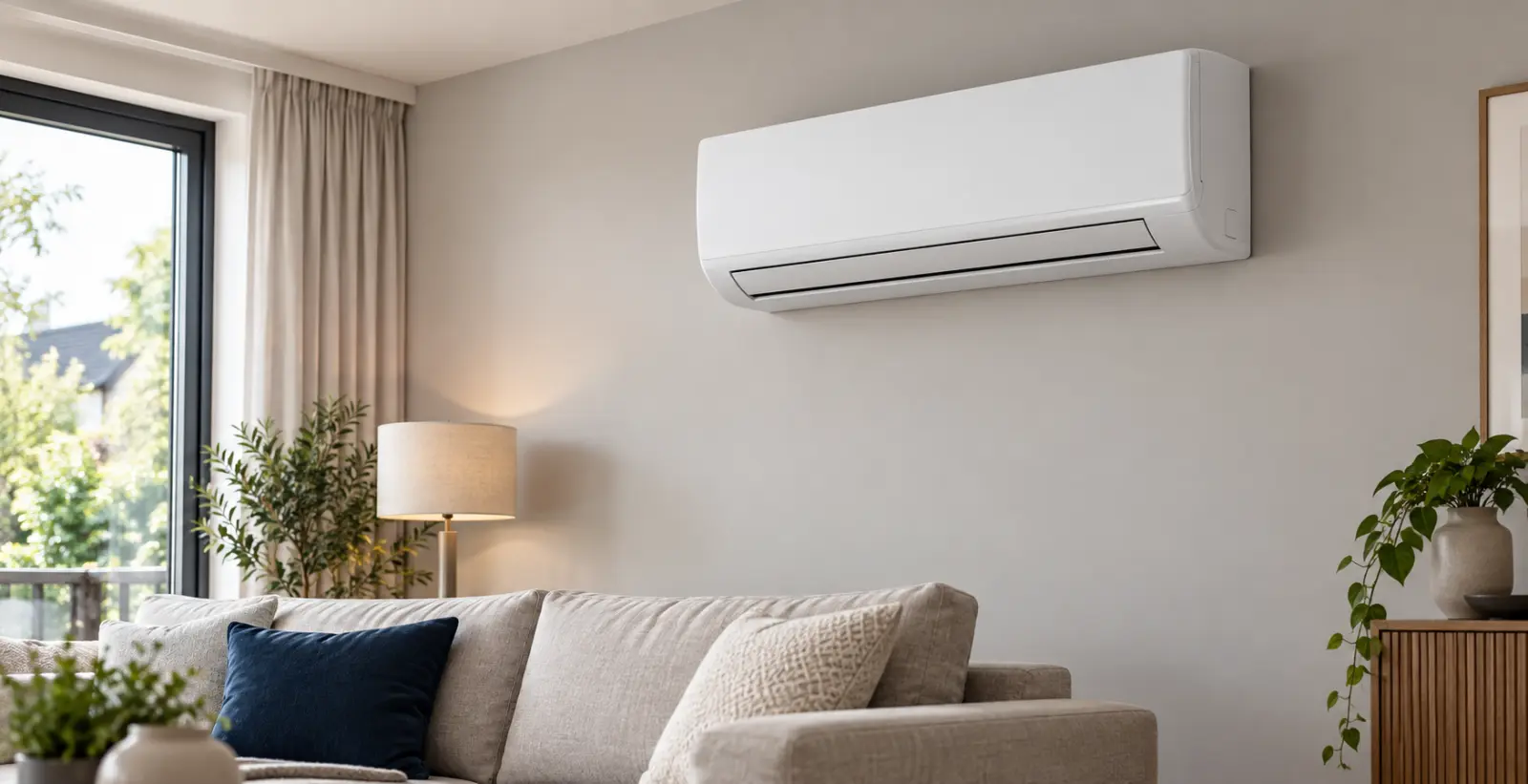
Wall-mounted split systems are usually the best option for loft conversions.
These systems include:
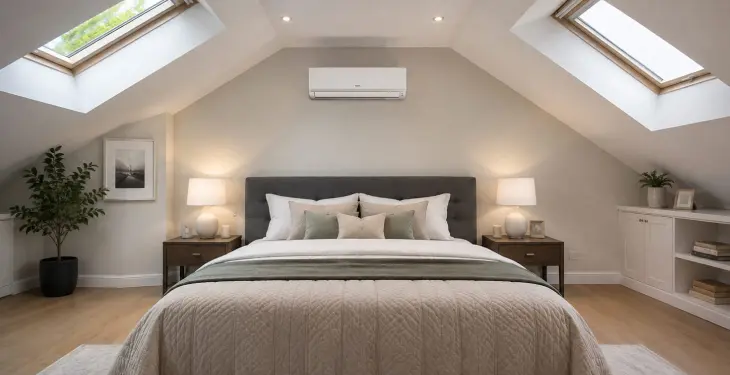
An indoor wall-mounted unit
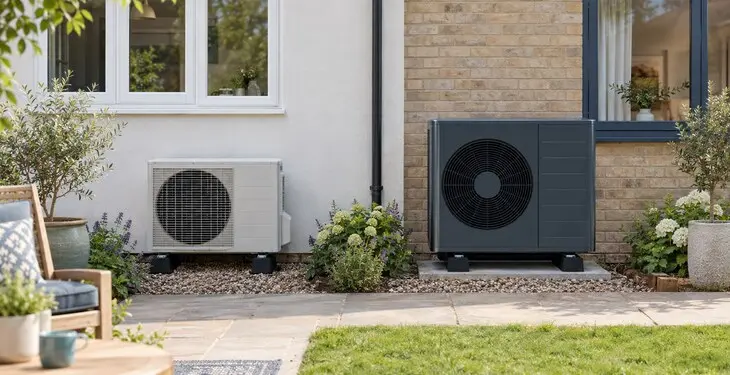
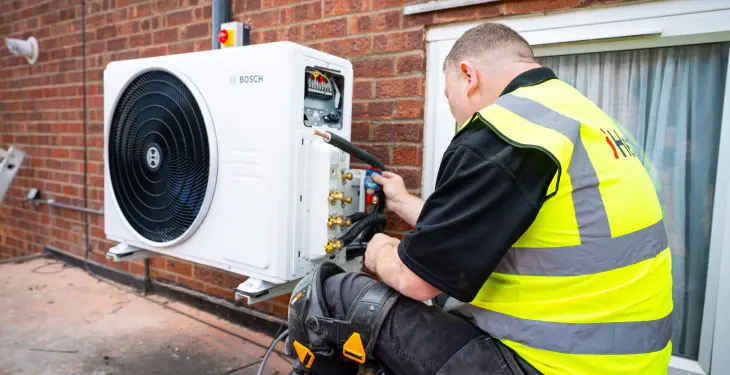
An outdoor condenser
Refrigerant pipework connecting both units
Because the compressor sits outside the room itself, split systems are significantly quieter indoors than portable air conditioners.
They also cool loft spaces faster and maintain steadier temperatures once the room reaches the target setting.
Expert Insight:
Loft rooms often require more careful airflow planning than standard bedrooms because sloped ceilings and tighter layouts can affect how cool air circulates around the space.
Installers will usually position indoor units where airflow can move across the room rather than directly toward the bed or desk area, particularly in smaller UK loft bedrooms where airflow can feel more noticeable overnight.
Before committing to any AC installs, it's advised homeowners check their suitability in terms of planning permission for air conditioning!
Why loft overheating catches homeowners off guard
One of the most common issues with loft conversions is that overheating often does not become obvious until the first prolonged warm spell.
During renovation work, the space may feel comfortable for most of the year. But once summer temperatures rise, roof spaces can quickly become far warmer than expected.
Modern insulation helps reduce heat transfer, but it can also trap warmth inside the room once temperatures build throughout the day.
This is especially noticeable in lofts with:
Large roof windows
Minimal shade
Dark roof materials
Poor ventilation
Limited cross airflow
In many UK homes, loft temperatures can remain uncomfortable late into the evening even after outdoor temperatures begin dropping.
Common loft air conditioning installation challenges
Installing air conditioning in a loft conversion is usually straightforward, but there are practical considerations installers normally assess first.
Limited wall space
Sloped ceilings and dormer layouts can reduce suitable mounting positions for indoor units.
In smaller loft bedrooms, poor positioning can make airflow feel too direct during sleep, particularly if the unit sits close to the bed.
Outdoor unit positioning
Outdoor condensers still require good airflow and stable mounting positions.
For loft conversions, pipe runs are sometimes longer because the condenser may need positioning lower on the property or further away from neighbouring windows.
Heat from skylights
Large roof windows can dramatically increase solar heat gain during summer afternoons.
Many homeowners underestimate how much direct sunlight affects loft temperatures until the room has experienced several hotter days in a row.
Noise considerations
Loft bedrooms are often quieter than the rest of the home overnight, which means airflow noise can feel more noticeable at night even when the system itself is operating quietly.
This is one reason lower-noise inverter systems are commonly recommended for sleeping areas.
How powerful should loft air conditioning be?
The correct system size depends on several factors, including:
Loft size
Ceiling height
Window size
Sun exposure
Insulation levels
Number of occupants
Electronic equipment inside the room
A compact loft office may need far less cooling power than a large dormer bedroom with extensive glazing and direct afternoon sunlight.
Oversized systems can sometimes create stronger airflow and more noticeable cycling, while undersized systems may struggle during heatwaves and run continuously without properly cooling the room.
Correct sizing usually creates steadier temperatures, quieter operation, and lower running costs over time.
Some homeowners expect loft air conditioning to cool the room instantly, but heavily sun-exposed spaces may still take time to stabilise after very hot afternoons, especially if the room has retained heat throughout the day.
Correct sizing helps systems maintain comfort more steadily rather than constantly trying to catch up with rising temperatures.
Best air conditioning systems for loft conversions
Some systems work particularly well in loft spaces because of their quieter operation, compact indoor units, and efficient inverter controls.
Model | Best For | Indoor Noise Level |
Daikin Sensira | Smaller loft bedrooms | From 21dB |
Worcester Bosch Climate 3200i | General loft cooling | From 20dB |
Worcester Bosch Climate 7000i | Premium loft spaces | From 19dB |
Mitsubishi Electric LN Series | Quiet overnight use | From 19dB |
Real-world sound levels vary depending on room conditions, fan speed, and system sizing.
Daikin Sensira
Homeowners often choose the Daikin Sensira for smaller loft bedrooms because the indoor unit remains relatively compact and quiet on lower fan settings.
Its inverter controls help maintain steadier temperatures without aggressive stop-start cycling, which can feel more noticeable at night in quieter loft spaces.
Worcester Bosch Climate 3200i
The Worcester Bosch Climate 3200i works well in loft offices and bedrooms where homeowners want both cooling and heating throughout the year.
Many people find systems like this particularly useful during spring and autumn when loft temperatures fluctuate more than the rest of the house.
Worcester Bosch Climate 7000i
The Climate 7000i is often better suited to larger or consistently warmer loft spaces where quieter overnight operation matters more.
Homeowners who are particularly sensitive to overnight noise often lean toward premium inverter systems like this because airflow adjustments tend to feel smoother and less intrusive once the room reaches temperature.
Can air conditioning stop loft rooms feeling stuffy?
In many cases, yes.
Loft rooms often feel uncomfortable not just because of heat, but because warm air becomes trapped with limited airflow movement.
Modern air conditioning systems help by:
Circulating air more effectively
Removing excess humidity
Maintaining steadier temperatures
Reducing stale or heavy air
Many homeowners notice the room feels fresher overall rather than simply colder.
This can make a significant difference during humid summer evenings when opening windows alone does little to improve comfort.
Can air conditioning heat a loft room too?
Yes.
Most modern split systems can both cool and heat rooms using heat pump technology.
This can work particularly well in loft conversions because roof spaces often cool down quickly during winter once outdoor temperatures drop.
Many homeowners use air conditioning systems year-round to maintain more stable temperatures without relying on portable heaters or separate electric radiators.
Does insulation still matter?
Absolutely.
Air conditioning works best alongside proper loft insulation rather than instead of it.
Poor insulation allows heat to build more quickly during summer and escape faster during winter, forcing the system to work harder throughout the year.
Well-insulated loft spaces usually:
Hold temperatures more consistently
Cool more efficiently
Reduce running costs
Feel more comfortable overnight
In practice, homeowners usually see the best results when insulation, ventilation, shading, and air conditioning work together rather than relying on one solution alone.
Are loft air conditioning systems expensive to run?
Running costs depend on:
System size
Energy efficiency
Insulation quality
Usage habits
Desired room temperature
Modern inverter systems are generally far more efficient than many homeowners expect, particularly compared to portable units or electric heaters.
Systems that constantly run at maximum output often indicate the room is poorly insulated or the system has been incorrectly sized.
Maintaining a steady comfortable temperature is usually more efficient than repeatedly cooling an overheated loft room after temperatures have already climbed too high.
Common mistakes when cooling loft conversions
Several common issues can affect comfort and efficiency.
Choosing a system that is too small
Undersized systems may struggle during hotter weather and run continuously without cooling effectively.
Relying on portable air conditioners
Portable units are usually louder, less efficient, and less effective in loft spaces where heat builds aggressively.
Ignoring window heat gain
Large skylights can dramatically increase room temperatures during sunny afternoons.
Poor indoor unit placement
Incorrect positioning can make airflow feel uncomfortable, especially near beds or desks.
Assuming insulation alone will solve overheating
Even well-insulated lofts can still trap heat during prolonged warm weather.
What to remember for loft conversion air conditioning:
Loft conversions are one of the most common areas in UK homes to suffer from overheating, particularly during summer evenings and heatwaves.
Modern split air conditioning systems can make a significant difference to comfort levels by improving cooling, airflow, humidity control, and even winter heating performance.
The key is choosing the correct system size, positioning it properly, and understanding how loft spaces behave during warmer weather rather than simply focusing on cooling power alone.
If you’re considering air conditioning for a loft conversion, iHeat can help you explore quieter, energy-efficient systems suited to loft bedrooms, offices, and converted roof spaces across a range of property types.
Last updated: