


Why Is My Air Conditioner Leaking Water?

Written by Stephen Day
Gas Safe Engineer
Updated:
An air conditioner usually leaks water because the condensate drain is blocked, the filters are dirty, the unit has frozen up, or the system has not been installed at the right angle.
Key takeaways
- Air conditioners produce water naturally, but it should drain away safely.
- The most common causes are blocked drains, dirty filters, frozen coils, or poor installation.
- Turn the unit off if water is leaking inside your home and get it checked if the issue keeps happening.
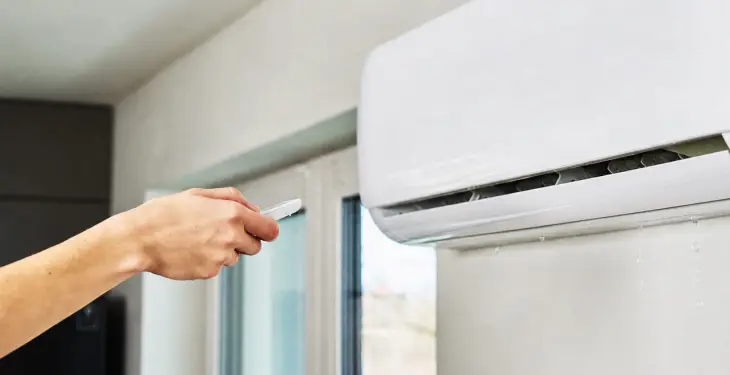
A leaking air conditioner is usually a sign that water is not draining away properly.
Air conditioning systems naturally create condensation as they cool the air, but that water should collect inside the unit and drain outside safely.
If water is dripping down your wall, pooling under the indoor unit, or leaking from the front of the system, something is stopping that process from working as it should.
In many cases, the cause is simple, such as a blocked drain pipe or dirty filter. In other cases, it can point to a frozen coil, poor installation, or a fault that needs a qualified engineer. Having your home air conditioning system professionally installed can help prevent many of these issues and improve long-term performance.
Check out our handy 2026 guide on other types of air conditioning errors and fixes!
Is it normal for an air conditioner to leak water?
It is normal for an air conditioner to produce water. It is not normal for that water to leak inside your home.
When warm air passes through the indoor unit, moisture in the air condenses on the cold coil.
That condensation then collects in a drain tray and leaves the system through a condensate pipe.
If everything is working correctly, you may see water dripping outside from the drain outlet. That is usually nothing to worry about.
The problem starts when water cannot leave the system properly. It then backs up, overflows, or escapes from the indoor unit.
Common causes of an air conditioner leaking water
Possible cause | What usually happens | What to do |
|---|---|---|
Blocked drain pipe | Water backs up and leaks from the indoor unit | Turn the unit off and arrange for the drain to be cleared |
Dirty air filter | Poor airflow can cause freezing and excess water | Clean or replace the filter |
Frozen evaporator coil | Ice melts and overwhelms the drain tray | Switch the system off and get it checked |
Incorrect installation angle | Water runs the wrong way instead of draining out | Ask an installer to inspect the unit level and pipework |
Damaged drain tray | Water escapes before reaching the drain pipe | A professional repair may be needed |
Faulty condensate pump | Water cannot be pumped away from the unit | The pump may need cleaning, repair, or replacement |
Blocked condensate drain pipe
A blocked condensate drain is one of the most common reasons for an air conditioner leaking water.
As your air conditioner runs, condensation collects and drains away through a small pipe. Over time, this pipe can become blocked with dust, dirt, algae, or general build-up.
Once the water has nowhere to go, it can back up into the indoor unit and leak into the room.
You might notice water dripping from the bottom of the unit, damp patches on the wall, or a leak that gets worse the longer the air conditioner runs.
A homeowner can check whether the outside drain outlet is visibly blocked, but internal blockages should usually be cleared by an engineer.
Avoid poking objects into the unit or pipework, as this could cause damage.
Dirty or clogged air filters
Dirty filters can also cause water leaks, even though the connection is not always obvious.
Air filters help keep dust and debris away from the internal components. When they become clogged, airflow through the unit drops.
Poor airflow can cause the evaporator coil to become too cold and freeze.
When that ice melts, it can create more water than the drain tray can handle, leading to leaks.
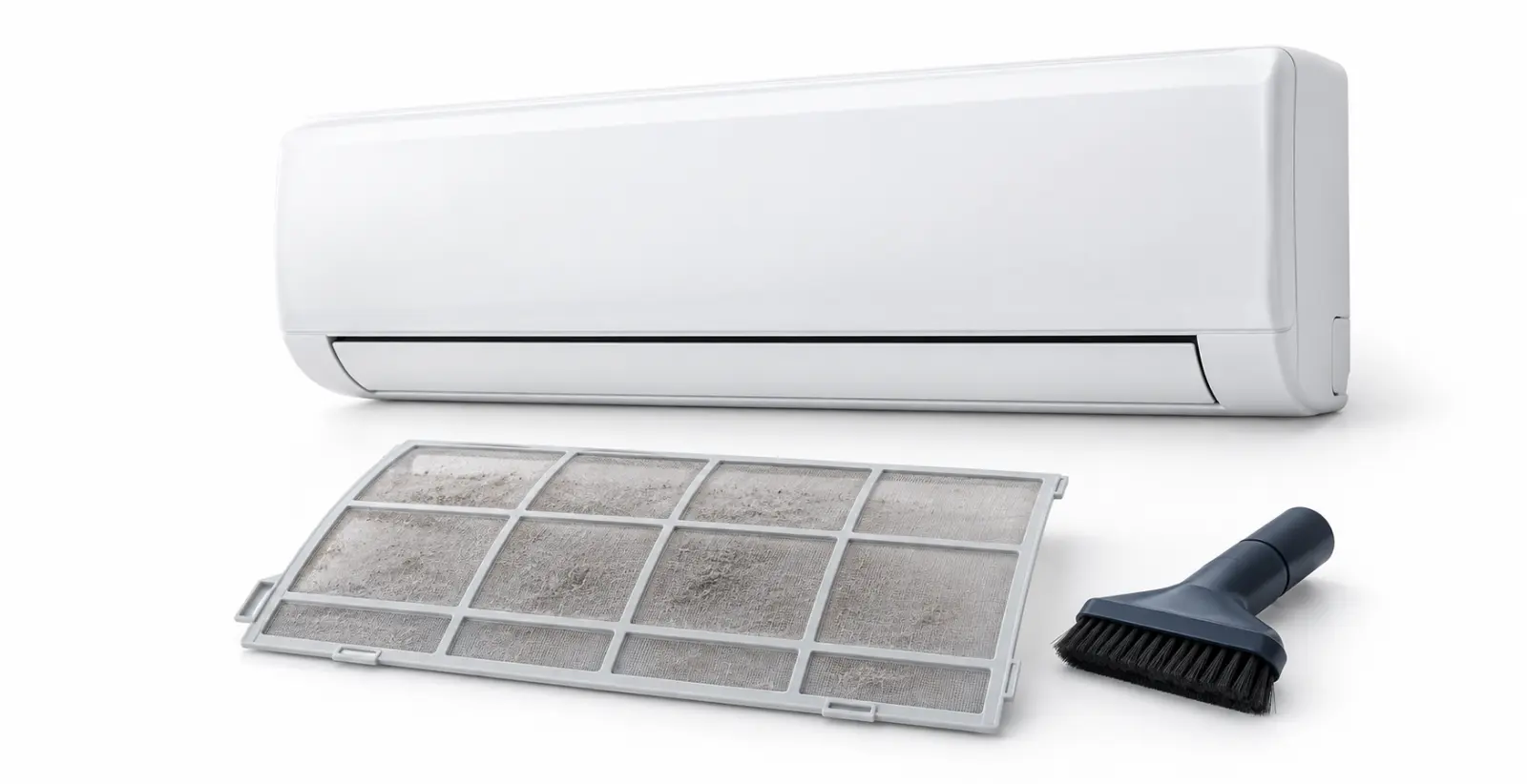
This is one of the easiest checks you can do yourself. Turn the unit off, remove the filter, and check whether it is covered in dust.
If it is washable, clean it gently and let it dry fully before refitting it. If it is damaged or heavily clogged, it may need replacing.
Frozen evaporator coil
A frozen evaporator coil is another common cause of leaking water.
This can happen when airflow is restricted, the filters are dirty, or there is a refrigerant issue.
Once ice builds up inside the unit, it may melt quickly when the system stops running. That sudden water flow can overwhelm the drain tray and lead to dripping.
Signs of a frozen coil can include weak airflow, reduced cooling performance, unusual noises, or visible frost on parts of the system.
If you suspect the coil has frozen, turn the unit off and let it thaw. Do not keep running the system, as this can make the issue worse.
If it happens again, the system should be inspected by a qualified air conditioning engineer.
Poor installation or incorrect unit angle
Air conditioning units need to be installed correctly so condensation naturally flows into the drain tray and out through the pipework.
If the indoor unit is not level, or the drain pipe does not have the correct fall, water can run back towards the unit instead of draining outside.
This is more likely if the leak started soon after installation or if water always appears from the same side of the unit.
This is not usually something a homeowner can fix safely. The system may need to be re-levelled, or the drain pipework may need adjusting.
Damaged drain tray
The drain tray sits inside the indoor unit and collects condensation before it leaves through the drain pipe.
If the tray is cracked, damaged, loose, or badly positioned, water can escape before it reaches the drain.
This is more common in older systems or units that have not been serviced for a long time.
A damaged drain tray can be difficult to confirm without opening the unit, so it is usually one for an engineer to inspect.
Faulty condensate pump
Not every air conditioning system relies on gravity drainage.
Some systems use a condensate pump to move water away from the indoor unit, especially where the pipework needs to run upwards or across a longer distance.
If the pump fails, becomes blocked, or loses power, water can build up and leak.
You might hear the pump making an unusual noise, running constantly, or not running at all.
If the system uses a pump and the unit is leaking, the pump should be checked as part of the diagnosis.
What should you do if your air conditioner is leaking water?
The first step is to turn the unit off. This helps reduce the risk of further water damage and protects the system from being forced to run while something is wrong.
Then check the basics:
Is the air filter dirty?
Is there visible ice or frost?
Is water coming from one side of the unit?
Is the outside drain outlet blocked?
Has the leak appeared suddenly or slowly over time?
If cleaning the filter solves the issue and the leak does not return, it may have been a simple airflow problem.
If the leak continues, comes back, or is linked to ice, poor cooling, or electrical issues, the system should be inspected professionally.
Can you keep using an air conditioner that is leaking?
It is not a good idea to keep using an air conditioner while it is leaking inside your home.
Even if the system still cools the room, the leak could lead to water damage, mould, staining, or electrical issues.
Running the unit can also make the underlying fault worse, especially if the coil is freezing or the drainage system is blocked.
Switch it off, check the filter, and get further advice if the leak does not stop.
How to prevent your air conditioner leaking again
Most water leaks can be prevented with regular maintenance.
Clean filters help keep airflow moving properly. Clear drain lines help condensation leave the system as intended.
Annual servicing helps spot issues with coils, pumps, trays, and pipework before they become bigger problems.
For homeowners using air conditioning for both cooling in summer and heating in colder months, maintenance becomes even more important because the system is working across more of the year.
If you want to reduce the risk of future leaks and improve long-term performance, our guide to maintaining your air conditioner covers the key servicing and upkeep checks for UK home AC systems.
Final thoughts on AC leaking water
Your air conditioner is most likely leaking water because condensation is not draining away properly.
The most common causes are a blocked drain pipe, dirty filter, frozen coil, faulty pump, damaged drain tray, or poor installation angle.
Some checks are simple, such as cleaning the filter or looking for visible ice. Other issues need a professional inspection, especially if the leak keeps returning or water is close to electrics.
The important thing is not to ignore it. A small leak can quickly become a bigger problem if the system keeps running without the cause being fixed.
Last updated:
Written by Stephen Day
Gas Safe Engineer at iHeat
Stephen Day is a Gas Safe registered and FGAS certified engineer with over 20 years of hands-on experience in the heating, cooling, and renewable energy industry, specialising in boiler installations, air conditioning, and heat pump systems.
LinkedInArticles by Stephen Day are reviewed by iHeat’s technical team to ensure accuracy and reliability.
More air conditioning help & advice
02nd October, 2026
Air Conditioning Maintenance:...
A practical guide to looking after home air conditioning, from cleaning washable filters t...
 Read Article
02nd October, 2026
How much does air conditioning...
Find out how much air conditioning costs to install and run in a UK home, including VAT re...
Read Article
01st October, 2026
Best wall mounted air conditio...
Compare wall mounted air conditioners for quiet bedrooms, everyday comfort and lower upfro...
Read Article