


Will a Bigger Solar Inverter Actually Save You Money? Real UK Home Upgrade Breakdown

Written by Bethany Armstrong
Renewables Manager
Updated:
A bigger solar inverter can save money in the right setup, but only when your home has enough demand, battery storage, and tariff flexibility to benefit from it.
- The real home upgrade: before and after
- Why the old system wasn’t saving enough money
- What does a bigger solar inverter actually do?
- Why battery storage matters just as much
- Why tariffs make such a big difference
- Why DNO approval can affect your UK solar upgrade
- G99 vs G100: what does it mean?
- Why battery location matters
- What was installed in the upgrade?
- How much did the upgrade cost?
- How much could this home save?
- So, is a bigger solar inverter worth it?
Key takeaways
- A bigger inverter can help, but only as part of the right system.
- Battery storage and tariff strategy often make the biggest difference.
- DNO limits can affect what solar setup you are allowed to install.
This real UK home spent around £3,318 on electricity in 12 months, despite already having solar panels, a battery, and a heat pump.
On paper, the setup looked strong. In reality, the system was not built around how much electricity the home actually used.
With annual usage of over 15,000 kWh, a small inverter, and limited battery storage, the property was still relying heavily on grid electricity.
So the question is not simply whether a bigger inverter saves money.
The better question is whether the whole system is designed properly. In this case, the bigger inverter helped, but the main financial benefit came from the full system upgrade.
The real home upgrade: before and after
This guide is based on a real UK home using over 15,000 kWh of electricity per year, with an existing solar, battery, and heat pump setup that was still leaving the household heavily reliant on grid electricity.
Before upgrade | After upgrade |
3.6 kW inverter | Tesla Powerwall 3 with larger built-in inverter capacity |
6.5 kWh battery | 27 kWh total battery storage |
9 solar panels | Existing solar used more effectively |
No proper backup | Tesla Gateway backup capability |
Around £3,318 annual electricity cost | Estimated £1,500 to £1,800 effective annual cost |
Heavy grid reliance | More usage shifted to solar and off-peak energy |
These figures are specific to this property, but they show why inverter size should never be looked at in isolation.
Why the old system wasn’t saving enough money
The original setup included:
9 solar panels
A 3.6 kW inverter
A 6.5 kWh battery
A heat pump
Annual electricity usage of over 15,000 kWh
Last year, the solar system generated around 2,484 kWh, leaving more than 12,000 kWh still being pulled from the grid.
The issue was not that the solar panels were not working. The issue was that the system could not keep up with the home’s demand.
This is common in higher-use homes, especially where a heat pump, EV charger, or large electrical loads are involved. A system that works well for an average property may feel undersized once daily demand becomes much higher.
What does a bigger solar inverter actually do?
A solar inverter converts electricity from your panels and battery into usable electricity for your home.
If the inverter is too small, it can become a bottleneck. Your panels or battery may be capable of supplying more electricity, but the inverter limits how much can be used at once.
A larger inverter can help by allowing:
More solar energy to be used directly in the home
More stored battery energy to be delivered during high-demand periods
Less reliance on the grid when appliances are running
Better support for homes with heat pumps or EV chargers
But a bigger inverter only saves money if your home has enough demand, storage, and tariff flexibility to benefit from it.
Why battery storage matters just as much
In this upgrade, the inverter was only one part of the improvement.
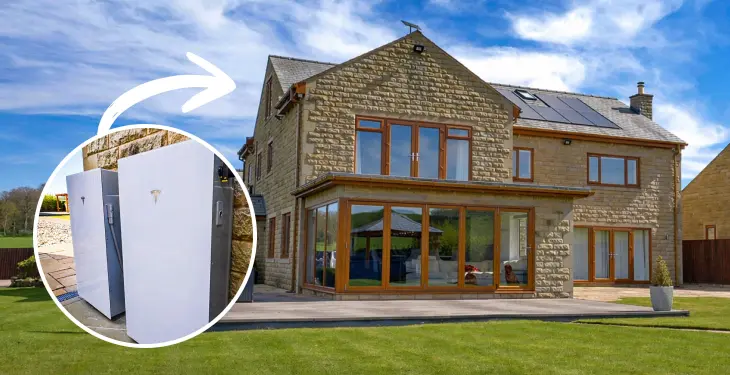
The old system had 6.5 kWh of storage. The new setup increased that to 27 kWh using a Tesla Powerwall 3 and expansion pack.
That is a major difference.
With more battery storage, the home can:
Store more solar energy during the day
Charge overnight when electricity is cheaper
Use stored energy during expensive peak-rate periods
Reduce how much electricity is imported from the grid
Solar panels generate electricity, but batteries decide when that electricity becomes useful.
For this home, the extra storage was essential because daily usage could be very high, especially in winter.
Why tariffs make such a big difference
This home is on an Octopus Go tariff, where the difference between peak and off-peak electricity is significant.
In this example:
Peak electricity is around 28.13p per kWh
Off-peak electricity is around 5.5p per kWh
That price gap creates the opportunity.
With a larger battery system, the home can charge overnight at the cheaper rate, then use that stored energy during the day when electricity would otherwise cost much more.
This is often called load shifting. It is one of the main reasons battery storage can be so valuable for high-usage homes.
The saving is not just about using less electricity. It is about buying less electricity at the wrong time.
Why DNO approval can affect your UK solar upgrade
Your local Distribution Network Operator, or DNO, manages how much electricity can be exported to the grid in your area.
This can affect:
The size of inverter you can install
How much electricity you can export
Whether your preferred system is approved
How quickly your installation can go ahead
As more homes install solar panels and batteries, some local grid areas become more constrained. That means waiting too long can sometimes limit your future options.
This is not about rushing into solar without thinking. It is about planning properly before grid restrictions reduce what is possible.
G99 vs G100: what does it mean?
If you want to install a larger inverter, your installer may need to apply through a G99 process.
In simple terms:
G99 is usually required for larger systems over 3.68 kW
Your installer applies to the DNO for approval
The process can take weeks
Approval is not always guaranteed at the level requested
For this home, the system used a G100 approach instead.
A G100 setup allows a more capable system to be installed while using software controls to limit how much electricity is exported to the grid.
In this case, the export limit was set to 7 kW. That meant the home could benefit from a larger, more flexible system while still staying within the approved grid limits.
Why battery location matters
The existing battery was installed in the loft, which is something many older systems have in common.
That is not always ideal.
Batteries and inverters generate heat, and loft spaces can become very warm, especially in summer. If equipment gets too hot, it may reduce performance or shut down to protect itself.
Accessibility also matters. If a battery needs to be checked, maintained, or upgraded, a cramped loft is not the most practical place for it.
For this upgrade, the old battery setup was removed and the new system was installed in a more suitable location, with better access and a cleaner layout.
What was installed in the upgrade?
The new setup included:
Tesla Powerwall 3
Tesla expansion pack
Tesla Gateway
27 kWh total battery storage
Built-in inverter capability up to 11.5 kW
7 kW software export limit
The Tesla Powerwall 3 combines battery storage and inverter technology in one unit, which helps reduce the number of separate components.
The Tesla Gateway adds backup capability. In a power cut, the system can isolate from the grid and keep essential parts of the home running, as long as there is enough stored energy available.
How much did the upgrade cost?
The total installed cost for this setup was £14,135.
With the current £700 Tesla rebate available at the time of filming, the effective cost reduces to £13,435.
That is a significant investment, so the important question is whether the savings justify the cost for this specific home.
How much could this home save?
Before the upgrade, the home used around 15,398 kWh over 12 months, costing approximately £3,318.
After the upgrade, the system is expected to shift far more usage away from peak-rate electricity.
Estimated annual costs after the upgrade:
Around £1,750 to £1,950 before export income
Around £1,500 to £1,800 after potential export income
That gives an estimated annual financial benefit of around £1,500 to £1,800.
Based on the effective cost of £13,435, the estimated payback period is roughly 7.5 to 9 years.
Payback should always be treated as an estimate, not a guarantee, because electricity prices, export rates, household usage, and weather all change over time.
When does a bigger inverter make sense?
A bigger inverter may be worth considering if:
Your home uses a lot of electricity
You have a heat pump or EV charger
Your battery cannot supply enough power during peak demand
You still import a lot from the grid despite having solar
You are planning to expand your system
You want better use of off-peak tariffs
In these cases, a small inverter can hold the wider system back.
When might a bigger inverter not be worth it?
A bigger inverter will not be right for every home.
It may not offer strong returns if:
Your electricity usage is low
Your current system already covers most of your demand
You do not have enough battery storage
You are not on a suitable time-of-use tariff
Your local DNO limits make expansion difficult
The best solar setup is not always the largest one. It is the one that matches your usage, tariff, property, and long-term plans.
So, is a bigger solar inverter worth it?
A bigger solar inverter can be worth it, but only when it is part of a properly designed system.
For this home, the upgrade made sense because the larger inverter worked alongside much more battery storage, smarter tariff use, export control, and backup capability.
The real saving does not come from inverter size alone. It comes from using more low-cost energy, reducing peak-rate imports, storing electricity more effectively, and giving the homeowner more control.
For high-usage homes, that can make a meaningful difference. But for most homeowners, the right starting point is not “how big should my inverter be?”
It is:
Does the system match how your home actually uses energy?
Last updated:
Written by Bethany Armstrong
Renewables Manager at iHeat
Bethany Armstrong is a renewables expert and operations manager at iHeat, specialising in heat pump solutions and solar project delivery across the UK.
LinkedInArticles by Bethany Armstrong are reviewed by iHeat’s technical team to ensure accuracy and reliability.
More solar & battery storage help & advice

30th September, 2026
Tesla Powerwall 3 Price UK: 20...
A clear guide to Tesla Powerwall 3 pricing in the UK, what affects installation costs, and...
 Read Article
29th September, 2026
What Size Solar Battery Do I N...
Your ideal solar battery size depends on your energy use and solar setup. This guide cover...
Read Article

29th September, 2026
Solar Panel Sizes UK 2026: Sol...
Most residential solar panels in the UK are around 1.7m tall and 1.1m wide, although exact...
Read Article