


Integrated Solar Panels UK: Costs, Pros & Cons

Written by Bethany Armstrong
Renewables Manager
Updated:
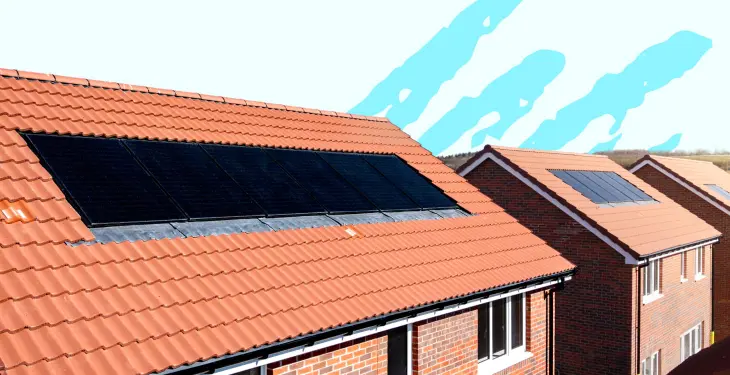
Integrated solar panels sit flush with the roof, so they look cleaner than standard panels, but they usually cost more and may generate slightly less power.
- What are integrated solar panels?
- How are integrated solar panels different from standard solar panels?
- What do integrated solar panels cost in the UK?
- Why are integrated solar panels more expensive?
- Are integrated solar panels less efficient?
- Do integrated solar panels look better?
- Who are integrated solar panels best for?
- When do integrated solar panels make the most sense?
- When might standard solar panels be the better choice?
- Pros of integrated solar panels
- Cons of integrated solar panels
- Are integrated solar panels worth it in the UK?
- Do integrated solar panels work with battery storage?
- Should you choose integrated solar panels or standard panels?
- Integrated solar panels UK: are they right for your home?
Key takeaways
- Integrated solar panels look cleaner but usually cost more.
- Standard panels are often better value for money.
- In-roof systems make most sense during roof work.
Integrated solar panels, also known as in-roof solar panels, are designed to sit within the roof itself rather than being mounted on top of it.
For some homeowners, that makes them a more attractive option, especially on new builds, extensions, re-roofing projects, and major renovations.
But appearance is only part of the decision. Integrated systems are usually more expensive than standard solar panels, and the performance trade-off matters too.
In this guide, we’ll break down integrated solar panels cost, how modern solar installation systems compare with traditional systems, and whether they are worth considering in the UK.
What are integrated solar panels?
Integrated solar panels are solar panels that sit within the roofline rather than above it.
That means they replace part of the roof covering instead of being mounted on rails over tiles or slates. The result is usually a neater, lower-profile finish than a standard on-roof solar installation.
You may also see them described as:
in-roof solar panels
roof-integrated solar panels
integrated PV panels
In simple terms, they do the same core job as standard solar panels. The difference is mainly in how they are fitted and how they look once installed.
How are integrated solar panels different from standard solar panels?
The main difference is installation.
Standard solar panels are fixed above the existing roof covering using brackets and rails. Integrated solar panels are built into the roof itself, so they sit flush rather than standing proud of it.
That affects three key things:
appearance
installation complexity
cost and performance
For many homeowners, the visual difference is the biggest reason to consider integrated solar. But from a practical point of view, standard panels are often simpler and more cost-effective.
What do integrated solar panels cost in the UK?
Integrated solar panels in the UK usually cost more than a standard on-roof solar system.
That is mainly because the installation is more involved. There is more roofing work, a different mounting method, and more coordination between the solar installation and the roof itself.
In simple terms, homeowners should usually expect:
standard on-roof solar to be the cheaper option
integrated solar panels cost to be higher for a similar system size
the price difference to make more sense when the roof is already being replaced
This is one of the most important parts of the decision. If your roof is already in good condition and you are simply adding solar, standard panels are usually the stronger value option.
Why are integrated solar panels more expensive?
There are a few reasons integrated solar panels cost more.
More roofing work
Because the panels form part of the roof, the installation usually involves more roof preparation and more labour than a standard bracket-and-rail system.
Specialist mounting system
The way integrated panels are fitted is different from a normal on-roof install, which adds complexity and cost.
Best suited to larger roof projects
Integrated panels make most sense when the roof is already being built, replaced, or heavily altered. If you are only adding solar, you may be paying extra mainly for the finish rather than for better output.
This is why integrated solar is often a design-led choice rather than a value-led one.
Are integrated solar panels less efficient?
Sometimes, yes.
Integrated solar panels can sometimes run warmer than standard on-roof panels because there is less airflow behind them. In practice, that can mean slightly lower performance in some setups.
That does not mean they perform badly. It means standard roof-mounted panels often have a small performance advantage because they are better ventilated.
For homeowners, the real takeaway is this:
standard panels are often the better choice if maximum output matters most
integrated panels are often chosen for appearance and roof integration rather than higher performance
The real-world difference will depend on the roof, the system design, and the installation.
Do integrated solar panels look better?
For many homeowners, yes.
This is the clearest advantage of integrated solar panels. Because they sit flush with the roof, they usually look more streamlined and less bolt-on than standard mounted panels.
That can be especially appealing if:
you are building a new home
you are replacing the roof anyway
you want a more discreet finish
you care about keeping the roofline as clean as possible
For some people, that cleaner look is enough to justify the extra cost. For others, it is not.
Who are integrated solar panels best for?
Integrated solar panels are usually best suited to homeowners who are:
building a new home
replacing the roof anyway
carrying out a major renovation
willing to pay more for a neater finish
They are usually less suitable for homeowners who:
already have a good existing roof
want the best value for money
want to maximise generation for the budget
prefer a simpler installation route
This is one of the clearest ways to judge whether they are right for your home. Integrated solar panels are not better in every situation. They are better suited to certain types of project.
When do integrated solar panels make the most sense?
Integrated solar panels usually make the most sense when they are being fitted as part of wider roof work.
That includes:
new builds
extensions
loft conversions
full roof replacements
major renovations
In these situations, the extra roofing work is already part of the job, so the cost difference can be easier to justify.
If your current roof is in good condition and you simply want solar added, standard on-roof panels are usually the more practical option.
This is probably the single most useful rule for homeowners comparing the two.
When might standard solar panels be the better choice?
Standard on-roof panels are often the better choice when:
your roof is already in good condition
you want stronger value for money
you want to maximise output for the budget
appearance matters less than payback
you want the simpler installation route
This is why standard solar remains the more common option for many homes. It is usually cheaper, simpler, and often slightly stronger on performance.
Integrated solar panels are not a bad option. They are just a more specific one.
Pros of integrated solar panels
Integrated solar panels do have some clear advantages.
Cleaner appearance
This is the main reason people choose them. They usually look more subtle and more built-in than standard panels.
Better suited to new roofs
If the roof is already being replaced or built, integrated panels can feel like a more natural part of the overall project.
Less visually intrusive
For homeowners who dislike the look of mounted panels, in-roof solar can be more appealing.
Can suit design-led projects
Integrated panels often fit better into homes where the roof finish and overall appearance matter more.
Cons of integrated solar panels
There are also some important downsides.
Higher upfront cost
Integrated solar panels usually cost more than standard systems.
Possible performance trade-off
Because airflow is more limited, they can sometimes run warmer and perform slightly less efficiently.
Lower value for money in some cases
If your main priority is payback and generation for the budget, standard solar panels are often the stronger option.
More dependent on the roof project
Integrated systems make the most sense when the roofing work already supports them. Without that context, the extra spend can be harder to justify.
Are integrated solar panels worth it in the UK?
For some homeowners, yes.
Integrated solar panels are usually worth it when:
the roof is being replaced anyway
appearance matters a lot
the home is a new build or major renovation
you are happy to pay more for a cleaner finish
They are usually less worth it when:
the existing roof is fine
value for money is the main priority
you want the strongest output for the lowest cost
the extra spend is hard to justify
So the balanced answer is that integrated solar panels can absolutely be worth it in the UK, but usually for design and roof-integration reasons rather than pure financial value.
Do integrated solar panels work with battery storage?
Yes, they can.
The fact that panels are integrated into the roof does not stop them working with battery storage. The bigger questions are still system size, battery size, inverter setup, and how the home uses electricity.
So if you are thinking about solar and battery storage together, the main decision remains whether integrated solar itself is the right fit for your property and priorities.
Should you choose integrated solar panels or standard panels?
That depends on what matters most to you.
Choose integrated solar panels if:
you are already doing major roof work
appearance is a major priority
you want a flush, built-in finish
you are happy to pay more for that look
Choose standard solar panels if:
you want stronger value for money
your roof is already in good condition
you want the simpler option
output and payback matter more than roof integration
That is really the heart of the decision. One is not always better than the other. They simply suit different priorities.
Integrated solar panels UK: are they right for your home?
Integrated solar panels can be a very good option for the right home, but they are not the automatic best choice.
If you are building, renovating, or replacing the roof anyway, they can give you a cleaner finish and a more integrated look.
If your main priorities are cost, efficiency, and return on investment, standard on-roof solar panels are often the stronger option.
For many homeowners, integrated solar panels are a design-led choice rather than a value-led one.
They can be an excellent fit if the roof is already being replaced or the appearance of the system matters a lot.
If the main goal is lower upfront cost and stronger value for money, standard on-roof panels are often the better option.
If you are comparing solar options more broadly, iHeat offers solar and battery systems for UK homes, with fixed online quotes and professional installation designed around what actually suits the property.
[cta_soalr]
Last updated:
Written by Bethany Armstrong
Renewables Manager at iHeat
Bethany Armstrong is a renewables expert and operations manager at iHeat, specialising in heat pump solutions and solar project delivery across the UK.
LinkedInArticles by Bethany Armstrong are reviewed by iHeat’s technical team to ensure accuracy and reliability.
More solar & battery storage help & advice
30th September, 2026
Tesla Powerwall 3 Price UK: 20...
A clear guide to Tesla Powerwall 3 pricing in the UK, what affects installation costs, and...
 Read Article
29th September, 2026
What Size Solar Battery Do I N...
Your ideal solar battery size depends on your energy use and solar setup. This guide cover...
Read Article
29th September, 2026
Will a Bigger Solar Inverter A...
A bigger solar inverter can save money in the right setup, but only when your home has eno...
Read Article