Does air conditioning bring fresh air into your home?

Written by Stephen Day
Gas Safe Engineer
Updated:
10 min read
Most home air conditioning systems do not bring fresh outside air into your home. Instead, they cool, filter and recirculate the air that's already inside the room.
In this article
Key takeaways
- Most domestic split air conditioners recirculate indoor air rather than drawing in fresh air from outside.
- Air recirculation, filtration and ventilation each serve different purposes.
- Your home still needs ventilation, even if you're using air conditioning.
It's easy to assume that the cool air coming from an air conditioner has been drawn in from outside.
After all, the room feels fresher, cooler and more comfortable after the system has been running.
In most UK homes, that's not actually what's happening.
From our experience installing domestic air conditioning systems, this is one of the questions homeowners ask most often. A standard wall-mounted split air conditioner doesn't continuously pull fresh air into your home.
Instead, it treats the air that's already inside the room, lowering its temperature, filtering it and circulating it more effectively.
Understanding the difference between recirculation, filtration and ventilation makes it much easier to understand what your air conditioning system is designed to do and why it performs so efficiently.
Does a home air conditioner bring in fresh air?
For almost all domestic split air conditioning systems, the answer is no.
The indoor unit continually draws air from inside the room, cools it and returns it back into the space. This cycle repeats while the system is operating, helping maintain a comfortable indoor temperature.
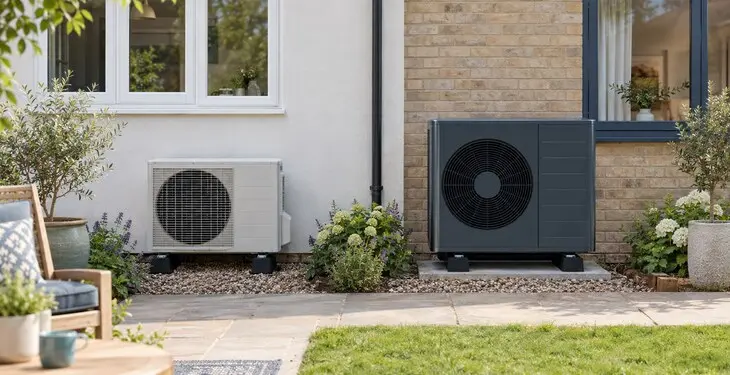
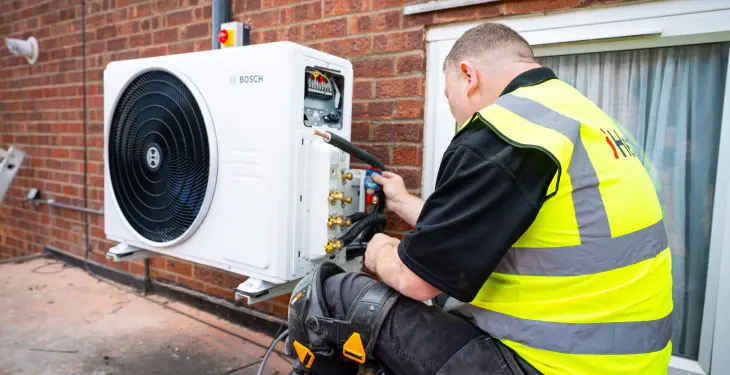
Although there's an outdoor unit mounted outside your property, it isn't supplying outdoor air to the room. Instead, its role is to release the unwanted heat that's been removed from your home's indoor air during the cooling process.
From our experience, many homeowners naturally assume the outdoor unit must also deliver fresh air indoors. In reality, the indoor and outdoor units are connected by refrigerant pipework that transfers heat, not air.
Why does the room feel fresher?
This is where much of the confusion comes from.
A room often feels fresher after the air conditioning has been running because several things happen at once. The temperature falls, humidity is reduced and the air is kept moving around the room instead of becoming stagnant.
As indoor air passes through the unit, it also moves through built-in filters before being circulated back into the room. Together, these processes can make the space feel noticeably cleaner and more comfortable.
From our experience, homeowners often describe this as "fresh air", even though the system is conditioning the existing indoor air rather than replacing it with outdoor air.
Why don't split air conditioners use outside air?
Domestic split systems are designed to cool indoor spaces as efficiently as possible.
If the system constantly pulled warm outdoor air into your home, it would need to cool a continuous supply of new air.
That would require significantly more energy and make it much harder to maintain a consistent indoor temperature.
Instead, the system repeatedly conditions the air already inside the room.
Because that air has already been cooled, the system can maintain the desired temperature more efficiently while using less energy than it would if it constantly relied on outside air.
From our experience, this is one of the reasons split air conditioning systems are so effective in homes.
They focus on maintaining comfortable indoor conditions rather than continually replacing the air inside the room.
What's the difference between recirculation, filtration and ventilation?
Although these terms are sometimes used interchangeably, they each describe something different.
Air recirculation
Recirculation means the system repeatedly uses the air that's already inside your home.
The indoor unit draws room air through the system, cools it and then distributes it back into the space.
This continuous cycle keeps temperatures consistent without introducing new outdoor air.
Air filtration
Filtration improves the quality of the recirculated air.
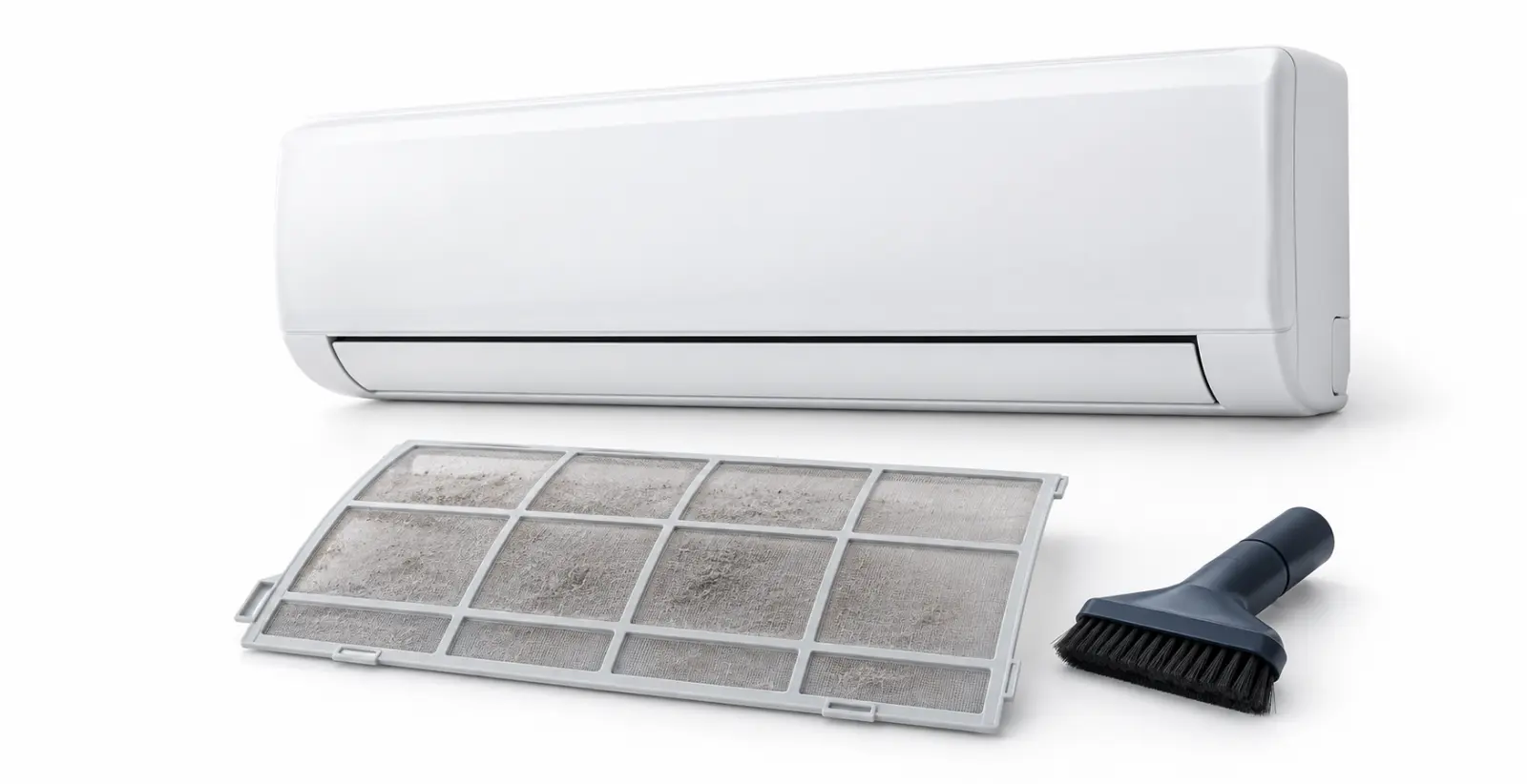
As air passes through the indoor unit, the filters capture airborne particles before the conditioned air returns to the room.
This helps improve indoor comfort while also supporting efficient system operation.
Filtration should not be confused with ventilation. The air may be cleaner after passing through the filters, but it's still the same indoor air being recirculated.
Ventilation
Ventilation means replacing stale indoor air with fresh outdoor air.
In most homes, this happens by opening windows or through dedicated ventilation systems designed to exchange indoor and outdoor air.
A standard wall-mounted split air conditioner doesn't perform this function.
From our experience, understanding these three processes helps explain why an air-conditioned room can feel cooler and cleaner while still relying primarily on the air that's already inside your home.
Does an air-conditioned room still need ventilation?
Yes.
Because a standard domestic split air conditioner recirculates indoor air rather than replacing it, your home still benefits from appropriate ventilation.
Ventilation allows fresh outdoor air to enter while helping remove stale air, moisture and everyday indoor pollutants.
Air conditioning and ventilation work alongside one another, but they perform different functions.
From our experience, homeowners sometimes assume that running the air conditioning means windows should never be opened.
While keeping windows closed often improves cooling efficiency when the system is operating, there will still be times when introducing fresh outdoor air is beneficial for overall indoor comfort.
Are there any home air conditioning systems that bring in fresh air?
There are some systems that can introduce fresh outdoor air, but they're not the type of air conditioners found in most UK homes.
Some specialist residential systems and whole-home ventilation solutions are designed to supply fresh air as part of their operation.
These are typically installed for specific property requirements and work differently from a standard wall-mounted split air conditioner.
For the vast majority of homeowners choosing a split system, the indoor unit will cool and recirculate indoor air rather than continuously drawing in air from outside.
From our experience, it's helpful to understand this distinction when comparing different types of home climate control systems, as not all systems are designed to perform the same role.
Common misconceptions about air conditioning and fresh air
Because air conditioning changes how a room feels, it's easy to misunderstand what the system is actually doing.
Some of the most common misconceptions include:
"The outdoor unit blows fresh air indoors." The outdoor unit releases heat from your home but doesn't supply outdoor air to the indoor unit.
"Cool air means fresh air." A cooler room often feels fresher, but the air has usually been recirculated rather than replaced.
"Air conditioning replaces ventilation." Air conditioning improves temperature and comfort, while ventilation introduces fresh outdoor air.
"Opening a window makes the air conditioner work differently." Opening windows simply allows outdoor air to enter the room. The air conditioner will continue recirculating indoor air while working harder to maintain the chosen temperature.
From our experience, understanding these differences helps homeowners use their air conditioning system more effectively and set realistic expectations about what it is designed to do.
Choosing the right system for your home
When planning a home air conditioning installation, it's worth understanding exactly what the system is designed to achieve.
A domestic split air conditioner is intended to cool, heat, dehumidify and continuously circulate the air already inside your home.
If your priority is introducing fresh outdoor air, that requires a separate ventilation solution rather than a standard wall-mounted air conditioning system.
At iHeat, we help homeowners choose air conditioning systems that suit their property's layout, comfort requirements and everyday use.
We also explain how each system works, so you know exactly what to expect before installation.
If you're considering home air conditioning installation, our team can help you choose a system that's designed for efficient, year-round comfort while making sure it's installed in the right location for the best possible performance.
Does an air-conditioned room still need ventilation?
Yes.
A standard domestic split air conditioner is designed to control the temperature of the air already inside your home, not replace it with fresh outdoor air.
That means ventilation still plays an important role in maintaining a healthy and comfortable indoor environment.
A well-insulated home naturally retains both heat and indoor air. While your air conditioning system keeps that air cool and comfortable, ventilation is what allows stale indoor air to be replaced with fresh outdoor air.
The two systems complement one another, but they perform different jobs.
From our experience, some homeowners assume that once air conditioning is installed, there's no longer any need to think about ventilation.
In reality, air conditioning manages temperature and air circulation, while ventilation manages the exchange of indoor and outdoor air.
Are there any home air conditioning systems that bring in fresh air?
There are some residential systems that can introduce fresh outdoor air, but they aren't the type of air conditioners installed in most UK homes.
The confusion often comes from commercial buildings, hotels and some specialist residential systems, where air conditioning may be combined with dedicated ventilation.
These systems are designed differently and can supply fresh outdoor air as part of the overall building services.
A standard wall-mounted split air conditioner works in a different way. It continually conditions and recirculates the air already inside the room, providing efficient cooling without drawing in outside air.
From our experience, understanding this distinction helps homeowners choose the right solution for their property and avoid expecting a split system to perform a function it wasn't designed for.
Why is this such a common misunderstanding?
It's understandable why many people believe their air conditioner brings fresh air into the room.
The outdoor unit is mounted outside the property, cool air flows from the indoor unit and the room often feels noticeably fresher after the system has been running.
It's easy to assume those things are connected.
In reality, the outdoor unit isn't supplying air to your home. Its purpose is to release the heat removed from the indoor air during the cooling cycle.
The air coming from the indoor unit is the same indoor air that's been cooled, filtered and recirculated.
From our experience, once homeowners understand that the indoor and outdoor units exchange heat rather than air, the way a split air conditioning system operates becomes much clearer.
Setting the right expectations before installation
Understanding what a home air conditioning system is designed to do helps you make a more informed decision before installation.
A domestic split air conditioner is designed to cool, heat, dehumidify and circulate the air already inside your home.
It delivers year-round comfort by maintaining a consistent indoor environment, but it isn't intended to provide continuous fresh air ventilation.
If introducing fresh outdoor air is an important requirement for your home, it's worth discussing this during the planning stage so the most appropriate solution can be considered alongside your air conditioning system.
From our experience, homeowners get the best long-term results when they understand exactly what their system is designed to do. Setting the right expectations from the outset helps ensure your air conditioning performs exactly as intended once it's installed.
Choosing the right air conditioning system for your home
Every home is different, which is why choosing the right air conditioning system involves more than simply selecting a unit with enough cooling capacity. Understanding how the system will operate within your home is just as important.
At iHeat, we help homeowners choose air conditioning systems that suit their property's layout, lifestyle and comfort requirements. We take the time to explain how domestic split systems work, what they're designed to achieve and how they'll perform once installed, so you can make an informed decision with confidence.
If you're considering home air conditioning installation, our team can recommend a solution that's tailored to your home and professionally installed to deliver efficient, reliable comfort throughout the year.
Last updated: