Air Conditioning Installation Process: What to Expect


Written by Stephen Day
Gas Safe Engineer
Updated:
9 min read
Most UK air conditioning installations are completed within one to two days, although setup can vary between homes.
In this article
Key takeaways
- Most installations take one to two days.
- Wall drilling and outdoor units are standard.
- Installation complexity varies between homes.
Most UK air conditioning installations are completed within one to two days, although setup can vary between homes.
For many homeowners, the installation process itself is one of the biggest unknowns when considering air conditioning. Questions around drilling, visible pipework, outdoor units, disruption, and how long the work will take are all common.
The good news is that most modern split-system air conditioning installations are relatively straightforward for experienced engineers. However, every property is different, and factors such as room layout, wall access, insulation, and outdoor unit positioning can all affect how the installation is planned.
This guide explains what homeowners can typically expect during a residential air conditioning installation in the UK.
What happens before installation day?
Before installation, most homeowners will first have:
A survey
A quotation
A system recommendation
During the survey, installers usually assess:
Room size
Heat build-up
Insulation
Window positioning
Outdoor unit placement
Electrical access
Pipe routing options
Homeowners often focus mainly on the indoor unit itself, but much of the planning actually revolves around how pipework, drainage, and electrical connections will run through the property.
In many UK homes, installers also assess:
Loft rooms
Home offices
South-facing bedrooms
Conservatories
Converted loft spaces
because these areas often experience the highest summer temperatures.
Surveys also often reveal installation considerations homeowners may not notice initially, such as drainage routes, airflow restrictions, or outdoor access limitations.
Expert Insight:
Air conditioning installation is usually more about layout planning than simply mounting a unit onto a wall. Pipe routing, drainage, airflow, and outdoor unit positioning all affect long-term performance, efficiency, and noise levels.
What happens on installation day?
On installation day, engineers will usually begin by:
Protecting working areas
Confirming unit locations
Checking electrical access
Preparing tools and equipment
For most single-room split-system installations, the process generally includes:
Mounting the indoor unit
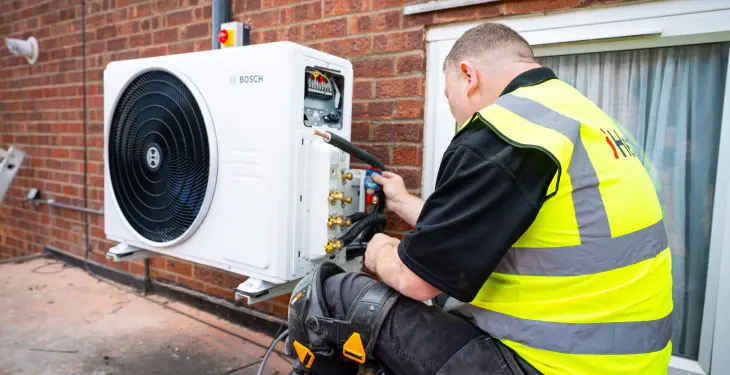
Installing the outdoor condenser
Drilling wall access holes
Running pipework and cabling
Connecting drainage
Testing the system
Commissioning and setup
Many homeowners are initially more concerned about drilling and visible pipework than the air conditioning unit itself.
In practice, most of the work is usually finished faster than homeowners expect.
Engineers often spend more time planning pipe routes and positioning than physically mounting the indoor unit itself.
For most homeowners, the noisiest part of the installation is usually the short period of wall drilling rather than the full installation itself.
Homeowners will also usually need to be present for at least part of the installation day to confirm unit positioning and allow property access.
Where is the indoor unit installed?
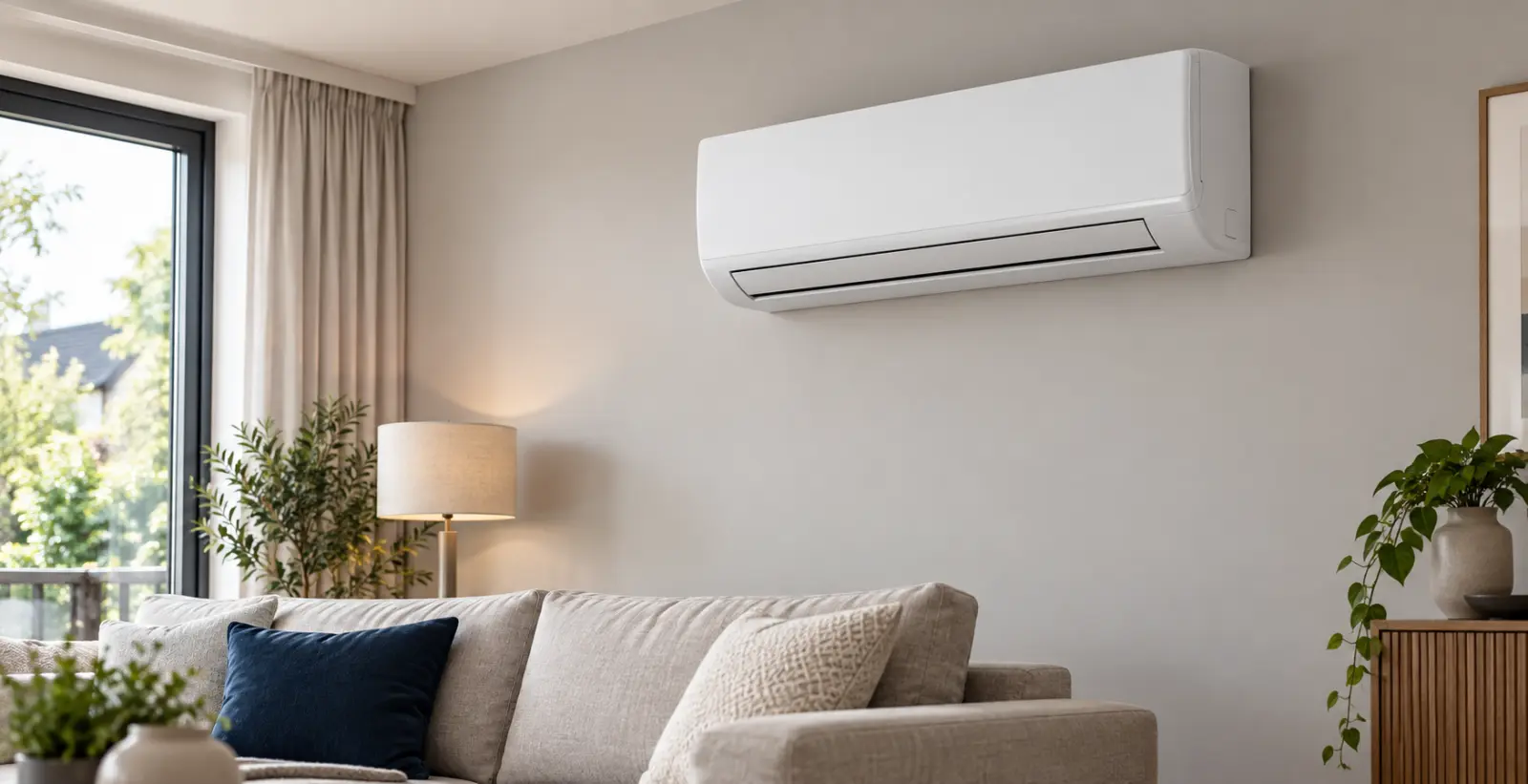
Indoor units are usually mounted high on a wall to help airflow circulate more effectively around the room.
The exact position depends on:
Room layout
Furniture placement
Ceiling height
External wall access
Airflow requirements
Installers will normally avoid positioning units:
Directly above beds
Too close to TVs
Behind furniture
In restricted airflow areas
Good unit positioning affects not only cooling performance, but also long-term comfort, airflow, and perceived noise levels.
In practice, positioning is often a balance between appearance, airflow performance, and practical installation access.
Two homes with similar room sizes can still require very different installation approaches depending on wall access, drainage routes, and outdoor unit positioning.
What happens outside the house?
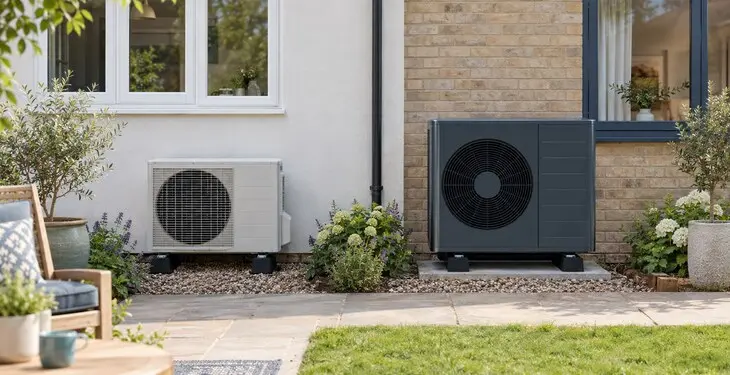
Most split air conditioning systems also require an outdoor condenser unit.
This unit is responsible for releasing heat removed from inside the property.
Outdoor units are commonly installed:
On external walls
At ground level
On flat roofs
In side returns
On rear elevations
Homeowners are often most concerned about:
Appearance
Noise
Neighbour proximity
Modern systems are generally much quieter than many people expect, particularly inverter-based systems running at lower output levels.
Most homeowners find modern inverter systems quieter than expected once installed, especially during normal day-to-day operation.
However, installers will still usually consider:
Bedroom windows
Nearby neighbours
Restricted airflow
Maintenance access
when selecting the outdoor unit location.
Many homeowners expect the outdoor unit to be the most noticeable part of the installation, but often become far more aware of airflow direction and indoor unit positioning once the system is running.
Is wall drilling required?
Usually, yes.
Most split-system installations require a core-drilled hole through an external wall to connect:
Refrigerant pipework
Cabling
Condensate drainage
The hole is normally relatively small and positioned discreetly behind or near the indoor unit.
Many homeowners initially worry about major structural disruption, but most residential installations only require limited drilling in specific areas.
This is completely normal during installation.
Will there be visible pipework?
Sometimes.
Pipework is usually concealed where possible, but visibility depends heavily on:
Property layout
Wall access
Room positioning
Outdoor unit location
In some homes, pipework may be hidden within:
Loft spaces
Boxing
Ceiling voids
External trunking
In others, some external trunking may remain visible.
Installers will usually try to position pipework and trunking as discreetly as possible while still maintaining good airflow and future maintenance access.
In some homes, achieving the neatest pipe routing may slightly limit unit positioning options.
Many homeowners become less concerned about visible trunking once they see how compact modern installations typically are in practice.
How long does installation usually take?
For many standard residential systems:
Single-room installations often take one day
Multi-room systems may take two days or longer
Several factors can increase installation time, including:
Difficult pipe routes
Loft conversions
Multiple indoor units
Older properties
Electrical upgrades
Limited outdoor access
Older UK properties sometimes require slightly more careful installation planning because wall construction and access routes can vary significantly.
In practice, installation timelines are often influenced more by property layout than the air conditioning unit itself.
Installation wait times can also increase during hotter weather periods when demand for residential cooling rises sharply.
Does the installation create much mess?
Usually less than homeowners expect.
Most professional installers use:
Dust sheets
Protective coverings
Controlled drilling methods
Vacuum extraction where possible
There will still usually be:
Some drilling dust
Engineer access throughout the property
Temporary disruption during installation
Engineers may also move regularly between indoor and outdoor working areas throughout the day while routing pipework and testing the system.
However, modern residential installations are generally far less disruptive than major renovation work.
Will electrical work be needed?
Usually, yes.
Air conditioning systems require dedicated electrical connections for safe operation.
Depending on the property and system size, this may involve:
New isolator switches
Electrical spur connections
Consumer unit assessment
Minor electrical upgrades
In some homes, existing electrical systems may already be suitable, while older properties occasionally require additional work.
Short power isolation periods may also occasionally be required during electrical connection work.
What happens after installation?
Once installation is complete, engineers will normally:
Pressure test the system
Vacuum the pipework
Check refrigerant operation
Test airflow
Verify drainage
Configure controls
Demonstrate system operation
Homeowners are usually shown:
How to adjust temperatures
Fan settings
Cooling and heating modes
Timer functions
Remote controls or app features
Most installers will also explain basic filter cleaning and ongoing maintenance requirements after commissioning the system.
Many homeowners are surprised by how quickly rooms cool down compared to portable air conditioners or fans.
Air conditioning systems also usually work most effectively when rooms are cooled gradually and consistently rather than waiting until spaces become extremely hot.
Others notice the biggest difference overnight, particularly in loft bedrooms and south-facing rooms that previously stayed warm well into the evening.
What can affect installation complexity?
Not all homes are equally straightforward to install air conditioning in.
Several factors can increase installation complexity:
Loft conversions
Flats
Listed buildings
Long pipe runs
Multiple rooms
Restricted outdoor access
Structural limitations
For example, loft conversions often require more careful pipe routing and drainage planning because of roof geometry and access limitations.
Flats may also involve additional considerations around:
Outdoor unit positioning
Lease agreements
Access permissions
Noise considerations
This is one reason professional surveys remain important even when homeowners already know which room they want to cool.
Are most UK homes suitable for air conditioning?
Many are.
Modern split systems are far more flexible and compact than older systems many homeowners remember.
In practice, air conditioning is now commonly installed in:
Bedrooms
Home offices
Loft rooms
Living rooms
Garden offices
Open-plan spaces
Some homeowners initially assume their home is unsuitable because of size or layout, only to find modern systems can often work effectively in more properties than expected.
Common misconceptions about air conditioning installation
Several misunderstandings still exist around the installation process.
“Installation takes several days”
Many single-room systems are completed within one day.
“Air conditioning installation is extremely disruptive”
Most residential installations are relatively contained and localised.
“Outdoor units are always noisy”
Modern inverter systems are usually much quieter than older air conditioning units.
“Pipework will always look messy”
Many modern installations use discreet routing and compact trunking systems where needed.
What homeowners often notice after installation
Many homeowners initially focus on cooling performance before installation, but afterwards often notice:
Better bedroom comfort overnight
Improved home office usability
Reduced heat build-up upstairs
More consistent room temperatures
Quieter operation than expected
During warmer UK weather, loft rooms and south-facing bedrooms often feel noticeably more comfortable once cooling is installed properly.
For some households, the biggest difference is simply making certain rooms usable again during hotter evenings.
What makes air conditioning installation feel easier for homeowners?
For most UK homes, air conditioning installation is usually a relatively straightforward process when properly planned and professionally installed.
The exact experience will still vary depending on:
Property layout
System size
Access conditions
Installation complexity
Most homeowners can expect:
Some drilling
Temporary disruption
Engineer access throughout the property
Outdoor unit installation
Electrical connection work
but usually far less disruption than many initially expect.
Good planning, realistic expectations, and choosing a reliable air conditioning installer all play a major role in making the process feel smoother and less stressful for homeowners.
If you’re considering home air conditioning installation, iHeat can help you understand how modern systems are installed, what setup may suit your property, and what to realistically expect during the installation process.
Last updated: