Is Air Conditioning Allowed in New-Build Homes?


Written by Stephen Day
Gas Safe Engineer
Updated:
7 min read
Yes, air conditioning is usually allowed in new-build homes, although property-specific restrictions and installation requirements may sometimes apply.
In this article
Key takeaways
- Air conditioning is generally allowed in most new-build homes.
- Restrictions are more likely to come from leasehold agreements, developers, or management companies than a general rule against air conditioning.
- Modern new-build homes can still experience overheating, making air conditioning an increasingly popular solution.
Many homeowners assume air conditioning is not allowed in new-build properties.
In most cases, this is not true.
There is no general rule preventing homeowners from installing air conditioning in a new-build home. However, certain factors such as property ownership, estate rules, external unit placement, and planning considerations can sometimes affect what is possible.
This is particularly relevant as more homeowners experience overheating in newer properties, especially during warmer weather.
This guide explains when air conditioning is usually permitted, what restrictions may apply, and what homeowners should consider before installation.
Why this question is becoming more common
Many homeowners are surprised to find themselves researching air conditioning shortly after moving into a new-build home.
Modern properties are often designed to be highly insulated and airtight, which improves energy efficiency but can also make some rooms retain heat for longer during warm weather.
Bedrooms, home offices, and south-facing rooms are often where overheating becomes most noticeable.
As a result, more homeowners are exploring air conditioning and discovering uncertainty around whether it is actually permitted in their property.
Is air conditioning allowed in new-build homes?
In most cases, yes.
Homeowners can usually install air conditioning in new-build houses provided the installation complies with any relevant property-specific requirements.
The confusion often comes from restrictions that may apply to certain developments rather than a ban on air conditioning itself.
For example, some properties may have:
Leasehold conditions
Estate management rules
Developer covenants
Requirements relating to external alterations
These restrictions vary significantly between developments and do not apply to every new-build home.
For many homeowners, the first step is simply checking whether any property-specific rules apply before planning an installation.
Why homeowners often think air conditioning isn't allowed
Several factors contribute to this misconception.
Many new-build developments are designed with a consistent appearance, which can make homeowners assume external equipment is prohibited.
Others confuse planning rules, leasehold agreements, and developer requirements with a complete restriction on air conditioning.
In reality, the situation is often more nuanced.
While some developments may place conditions on where outdoor units can be positioned, this is very different from air conditioning being universally prohibited.
Understanding the specific rules that apply to your property is usually far more important than focusing on whether the home is new-build.
New-build homes can still overheat
One reason interest in air conditioning is increasing among new-build homeowners is that modern homes can sometimes retain heat surprisingly well.
Features that improve energy efficiency can also contribute to overheating during warmer weather, including:
High insulation levels
Airtight construction
Large glazed areas
South-facing rooms
Loft bedrooms
Many homeowners expect newer homes to remain comfortable automatically, only to discover certain rooms become uncomfortably warm during summer.
Expert Insight:
Many overheating complaints we hear from homeowners are not related to poor insulation but to heat becoming trapped inside highly efficient homes during prolonged warm weather. Bedrooms and upper floors are often the first areas where this becomes noticeable.
New-build does not mean future-proof against overheating
Many homeowners assume that because a property is new, it will automatically remain comfortable throughout the year.
However, factors such as solar gain, room orientation, glazing, occupancy levels, and room usage can all influence indoor temperatures regardless of the property's age.
One common pattern is a homeowner's first summer feeling manageable, followed by a particularly warm year where bedrooms and upper floors become noticeably more difficult to keep comfortable overnight.
This is one reason air conditioning is becoming increasingly common in modern homes.
Houses, flats, and leasehold properties
Whether air conditioning can be installed often depends on the type of property.
Freehold houses typically offer the greatest flexibility because homeowners generally have more control over alterations to their property.
Flats and apartments can be different.
Leasehold agreements, management companies, and freeholder permissions may influence what modifications are permitted, particularly where outdoor units are involved.
In many cases, the restriction is not the air conditioning system itself but the external unit positioned outside the property.
This is why apartment owners and leaseholders should check any approval requirements before planning an installation.
Developer and estate restrictions
Some new-build developments include covenants or estate rules designed to maintain a consistent appearance across the site.
These requirements may affect:
Outdoor unit placement
Visibility from public areas
External alterations
Equipment positioning
The exact requirements vary between developments.
Importantly, these restrictions are usually development-specific rather than national rules applying to all new-build homes.
Questions to check before installing air conditioning
Before arranging an installation, it is worth checking:
Whether the property is freehold or leasehold
Whether any developer covenants apply
Whether a management company has approval requirements
Where an outdoor unit could be positioned
Whether any planning restrictions affect the property
For many homeowners, these checks provide clarity long before any installation work begins.
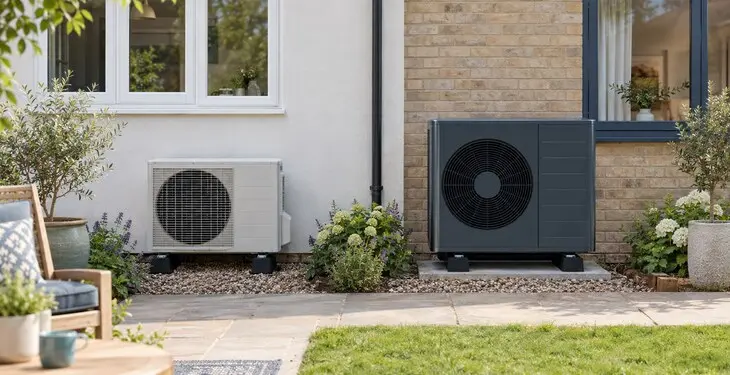
Outdoor unit placement considerations
For most residential air conditioning systems, the outdoor unit is one of the main practical considerations.
Suitable locations may include:
Rear gardens
Side elevations
Courtyards
Rear walls
The aim is usually to balance:
System performance
Accessibility
Visual appearance
Property-specific requirements
For many homeowners, careful placement helps address potential concerns while maintaining efficient operation.
Common considerations before installation
Consideration | Why it matters |
Property type | Houses and flats often have different requirements |
Ownership structure | Freehold and leasehold properties may have different permissions |
Outdoor unit location | Positioning can affect approvals and appearance |
Estate restrictions | Some developments include additional rules |
Electrical supply | Newer homes generally have suitable electrical infrastructure |
Does installing air conditioning affect your warranty?
Some homeowners worry that adding air conditioning could affect their new-build warranty.
The answer depends on the specific warranty provider and the nature of the installation.
Because warranty terms vary, homeowners should always review their documentation or seek clarification if they have concerns.
Professional installation is particularly important to ensure work is completed correctly and in accordance with manufacturer requirements.
Common misconceptions about air conditioning in new-build homes
"Air conditioning isn't allowed in new-build homes"
In most cases, this is incorrect. Air conditioning is usually permitted, although property-specific requirements may apply.
"New homes don't need cooling"
Some modern homes can experience significant overheating, particularly during warm weather.
"Planning permission is always required"
Requirements vary depending on the property and installation details.
"Installing air conditioning automatically voids my warranty"
Warranty implications depend on the provider and the work carried out.
For most homeowners, the question is not whether air conditioning is allowed
For most homeowners, the more important question is not whether air conditioning is allowed, but whether the home experiences enough overheating to justify cooling.
In many cases, modern air conditioning systems can be installed successfully in new-build properties, provided any relevant leasehold conditions, estate rules, or property-specific requirements are considered during the planning stage.
Bedrooms that remain warm overnight, south-facing rooms that retain heat throughout the day, and home offices that become uncomfortable during summer are some of the most common reasons homeowners begin exploring cooling solutions.
The key is understanding the requirements that apply to your specific property rather than assuming air conditioning is prohibited simply because the home is new-build.
If you're considering home air conditioning, iHeat can help homeowners explore modern systems designed to improve comfort, reduce overheating, and create a more enjoyable living environment throughout the year.
Last updated: